
Automated Production Solutions for EV Charging Power Supply Line Automation
Automated Production solutions concept for EV charging power-supply products, covering robot workstations, return conveyors, buffer warehouse, dispensing and screw fastening.
See how we designed this project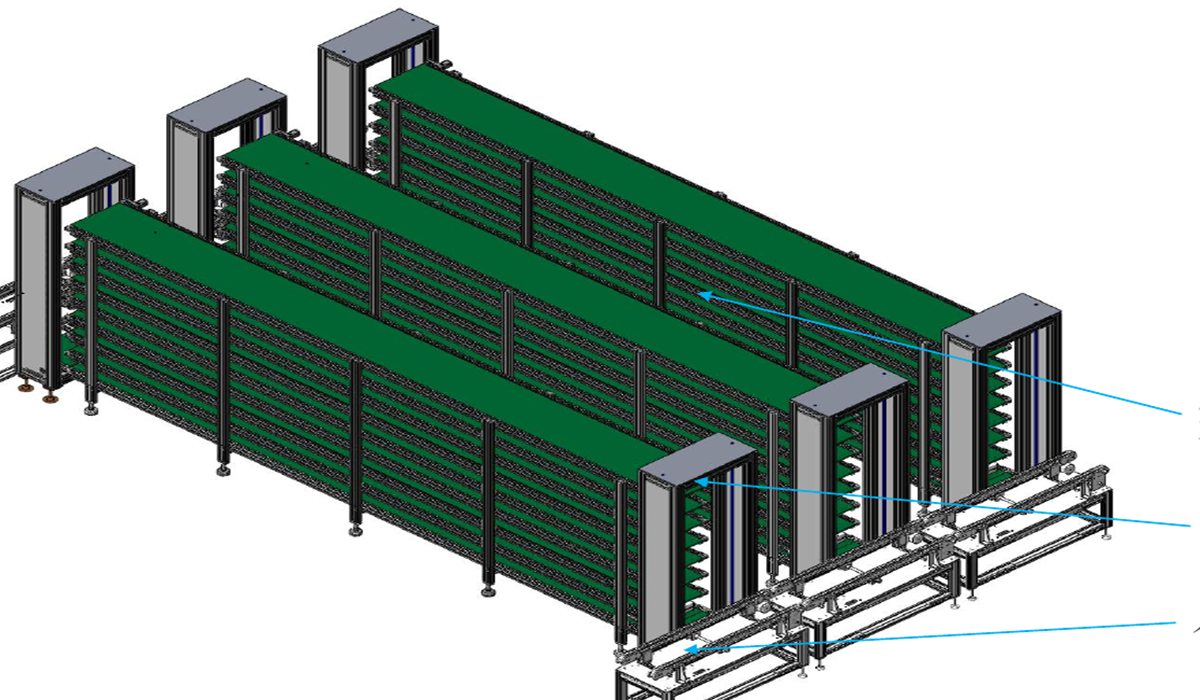
Project Snapshot
- Client Type
- EV Charging Power Electronics Manufacturer
- Timeline
- Source material has no explicit date
- Deliverables
- Full-line equipment and conveyor layout
- Three-stage vertical buffer warehouse concept
- Robot dispensing, screw fastening, turnover and insulation-pressure handling stations
- Digital line dashboard and MES interface planning
Background
Project scope
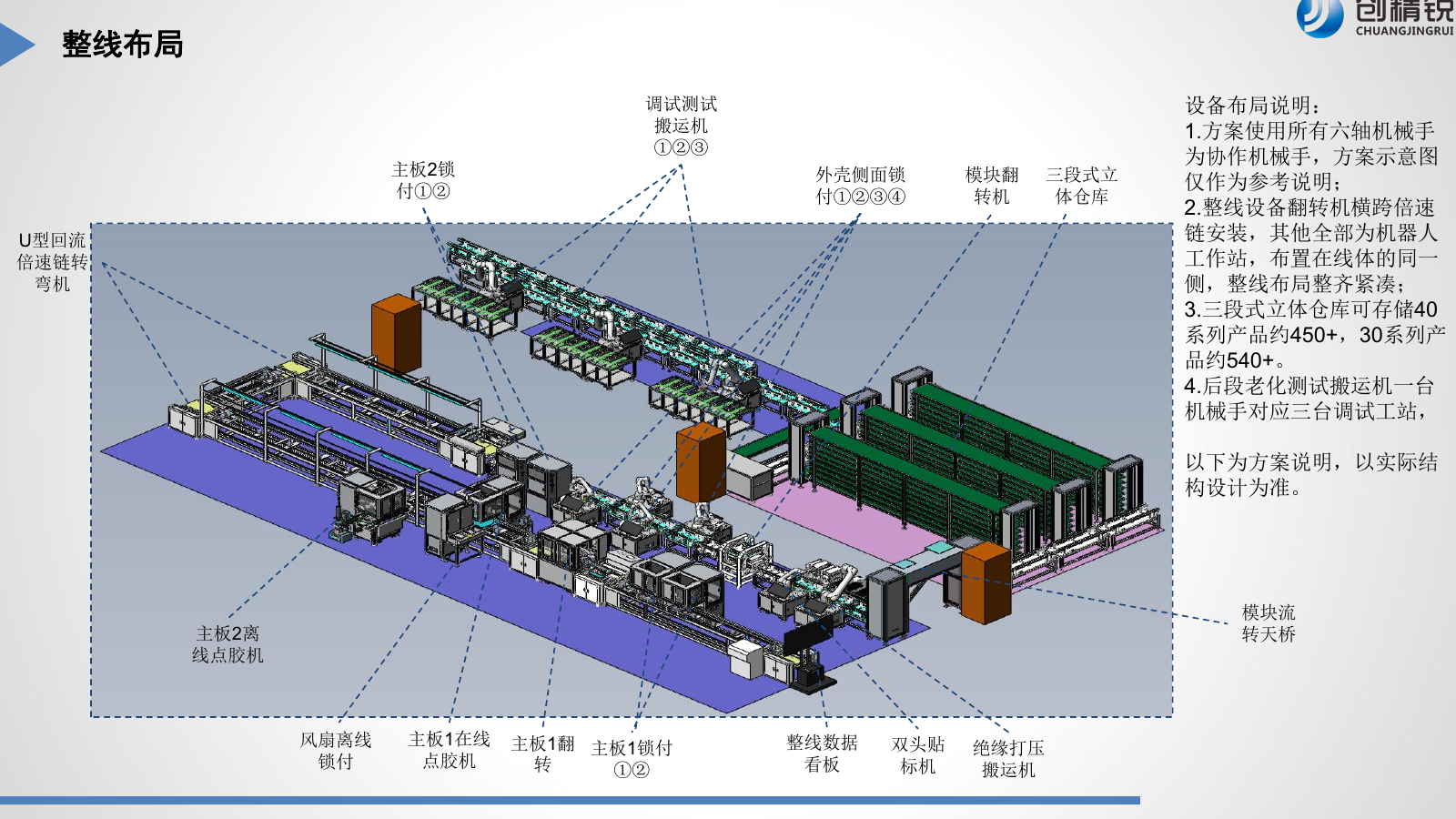
We planned a full-line automation concept for EV charging power-supply products. The line covers upstream preparation assumptions, robot workstations arranged along the same side of the conveyor, double-layer return chain conveyor, vertical buffer warehouse, dispensing, screw fastening, turnover, labeling, insulation-pressure handling, anti-static carrier boards, line dashboard and software integration. That makes the scope an automated Production solutions application for charging power module assembly, dispensing, screw fastening, turnover, testing and line data.
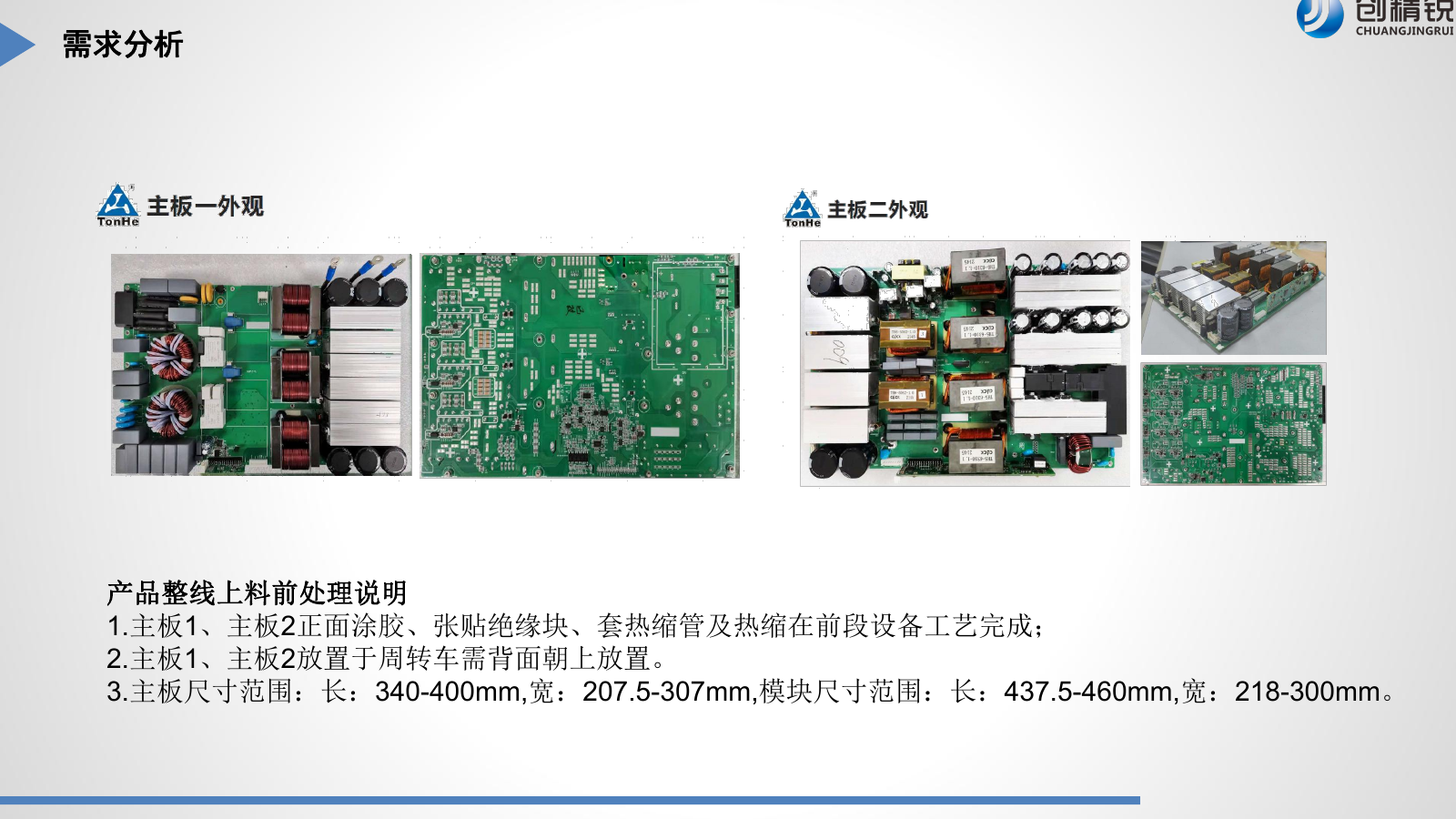
Before the line receives product, the preparation assumptions are that mainboard assemblies have already completed front-side dispensing, insulation-block application, heat-shrink tube application and heat shrinking. Mainboard 1 and mainboard 2 are placed on turnover carts with the back side facing upward. The listed size ranges are 340 to 400 mm long and 207.5 to 307 mm wide for mainboards, and 437.5 to 460 mm long and 218 to 300 mm wide for modules.
Challenge
Integrating many stations into one compact line
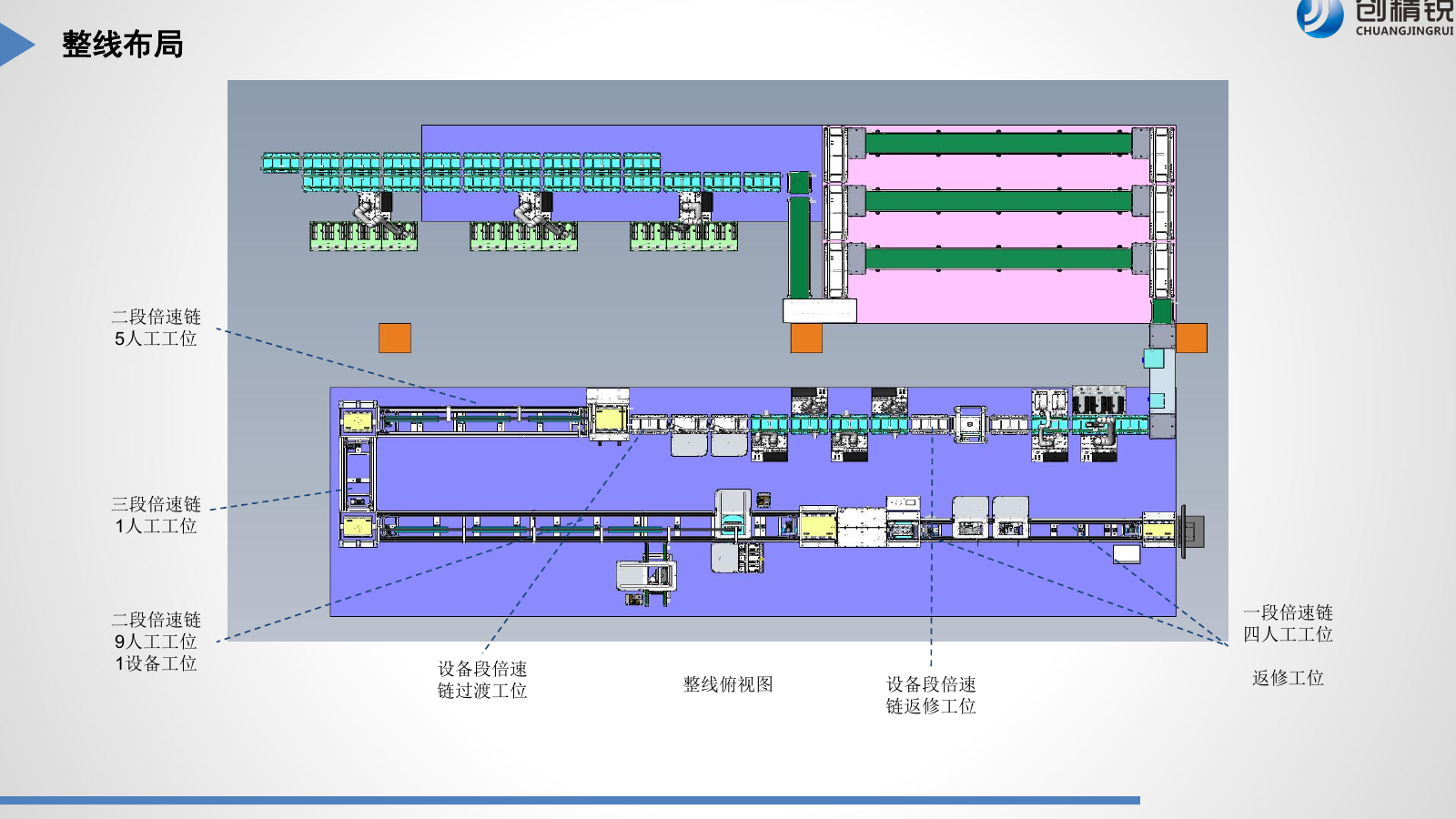
The line includes manual stations, robot stations, module turnover, mainboard turnover, offline dispensing, offline fan screw fastening, side screw fastening, labeling, insulation-pressure handling, testing, buffer storage and line data display. The layout therefore needs controlled product routing, repair access and clear separation between manual work and automated workstations.
Buffering product families without blocking downstream testing
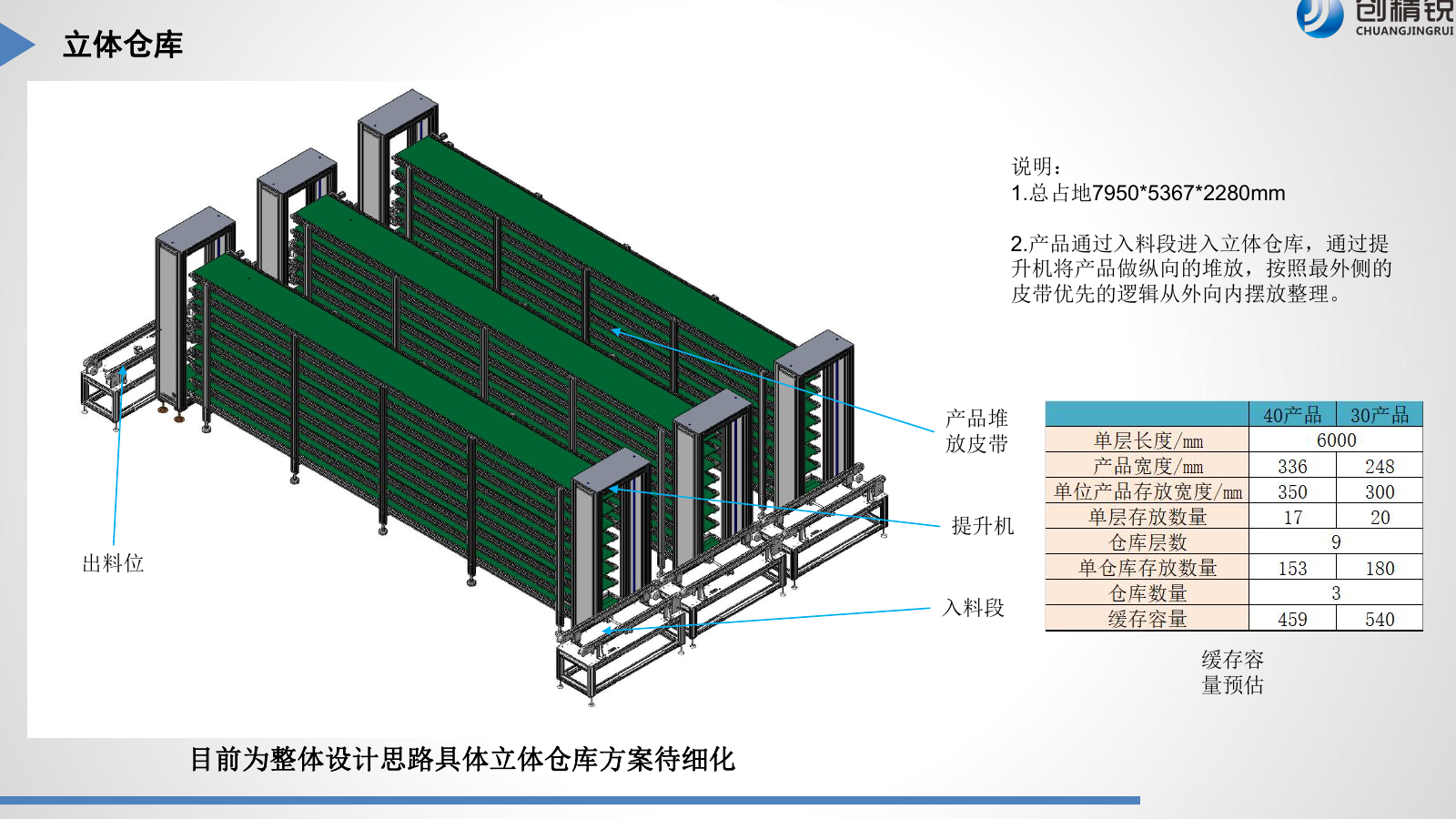
The proposed vertical warehouse is used as a buffer between line sections. Its sizing matters because downstream aging/debug testing and handling can create uneven flow. The warehouse concept stores about 450+ units for 40-series products and about 540+ units for 30-series products.
Approach
Full-line layout
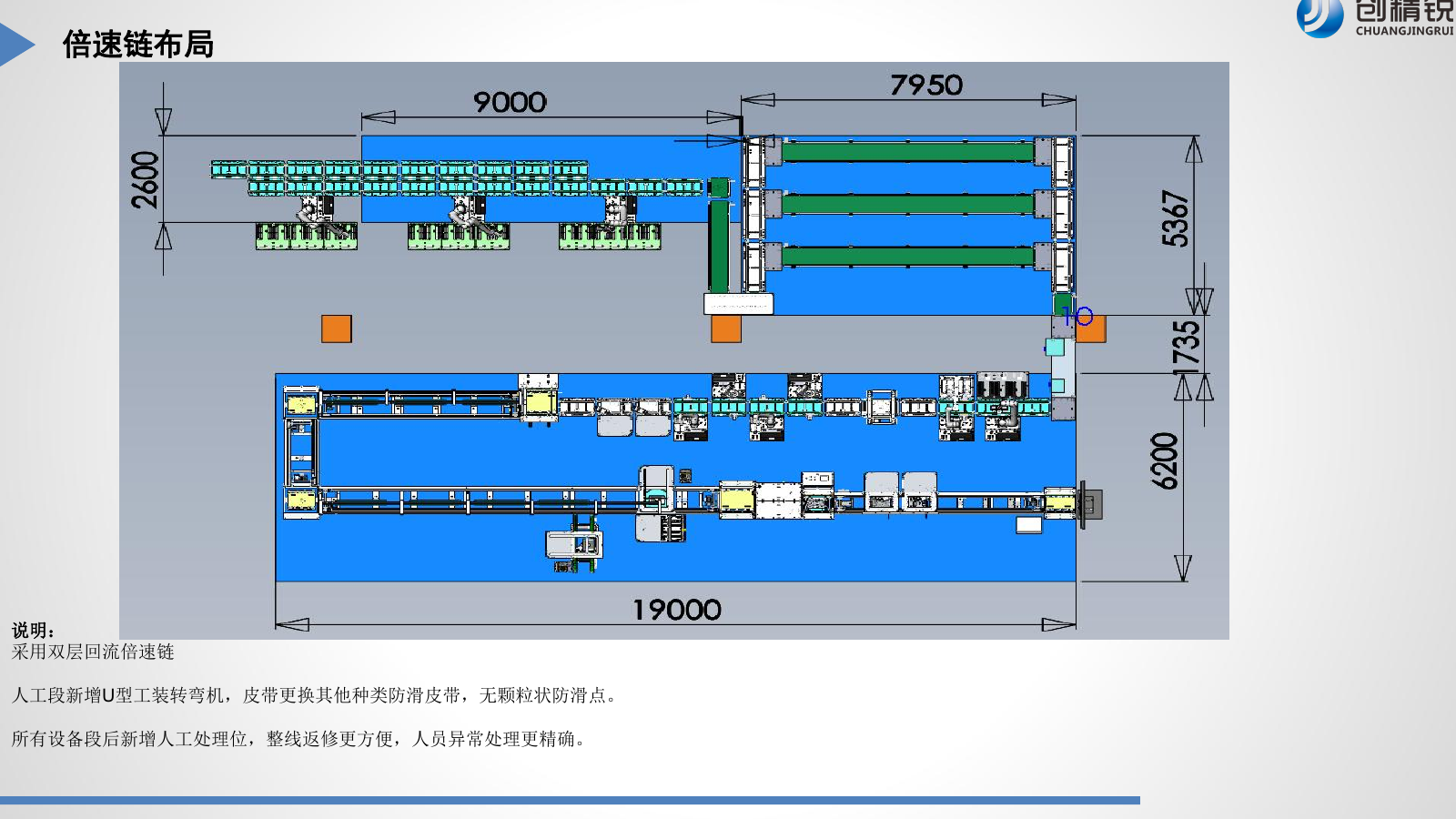
The concept uses six-axis robots, with stations arranged on the same side of the line for a compact layout. The turnover machines span across the double-speed chain conveyor, while other equipment is arranged as robot workstations beside the conveyor. The rear aging/debug handling concept assigns one handling robot to three debug workstations.
For a related Robotlyne application in automotive energy production, see our automotive energy automated production solutions case study: https://www.robotlyne.com/automotive-energy-automated-production-solutions-case-study/
Conveyor and buffer storage
The conveyor concept uses a double-layer return double-speed chain. A U-shaped workpiece-board turning machine is added in the manual section, and the belt is changed to a non-granular anti-slip belt. Manual handling positions are added after equipment sections to make repair and abnormal-condition handling more precise.
The three-stage vertical buffer warehouse has a listed footprint of 7,950 x 5,367 x 2,280 mm. Product enters through the infeed section, is vertically stacked by a lift, and is organized from the outside inward according to the priority of the outermost belt. The warehouse table lists a 6,000 mm unit length, 9 warehouse layers, 3 warehouse groups, 153 units per warehouse for 40-series products and 180 units per warehouse for 30-series products, giving estimated buffer capacities of 459 and 540 units respectively.
Dispensing, screw fastening and turnover equipment
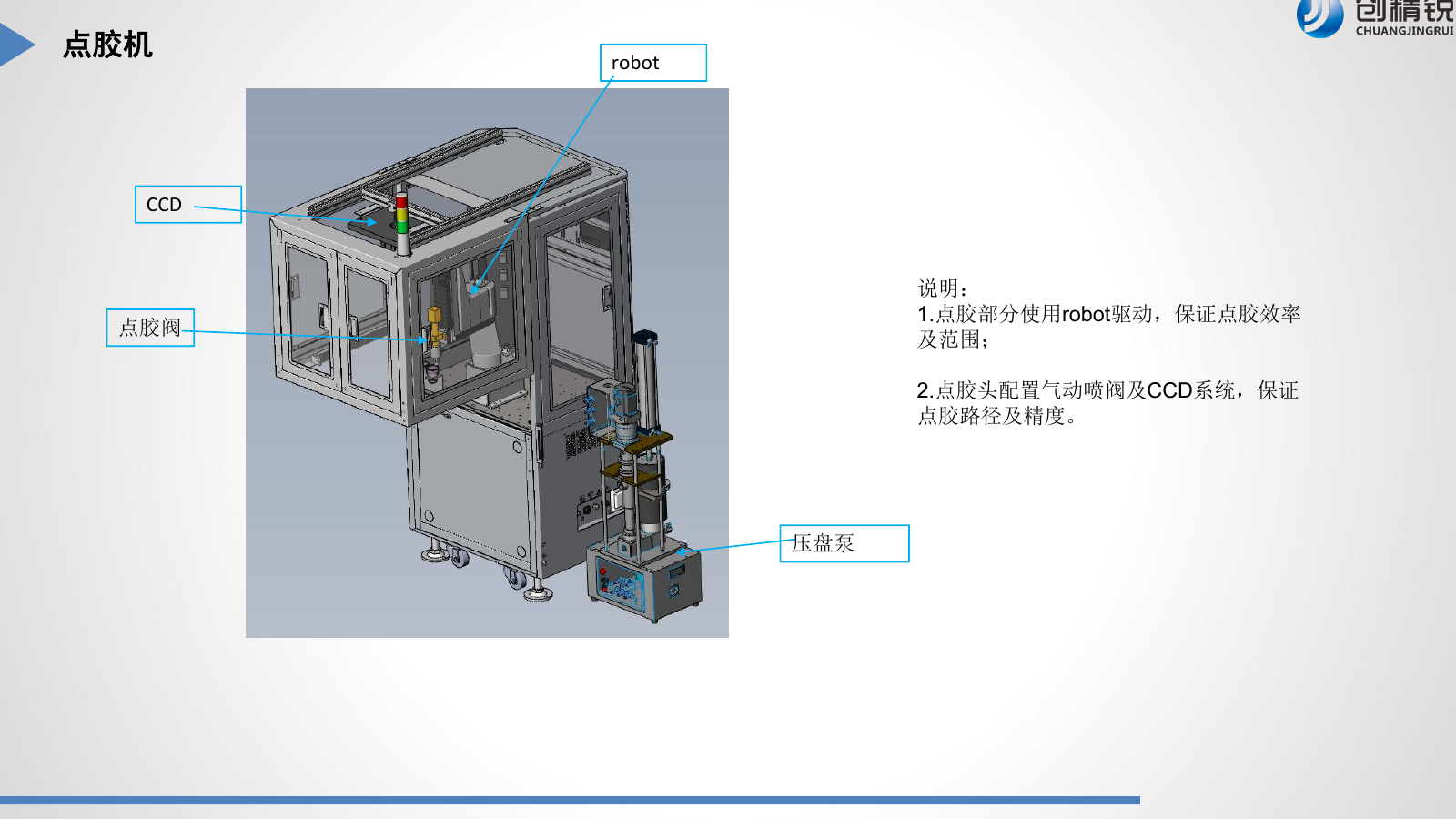
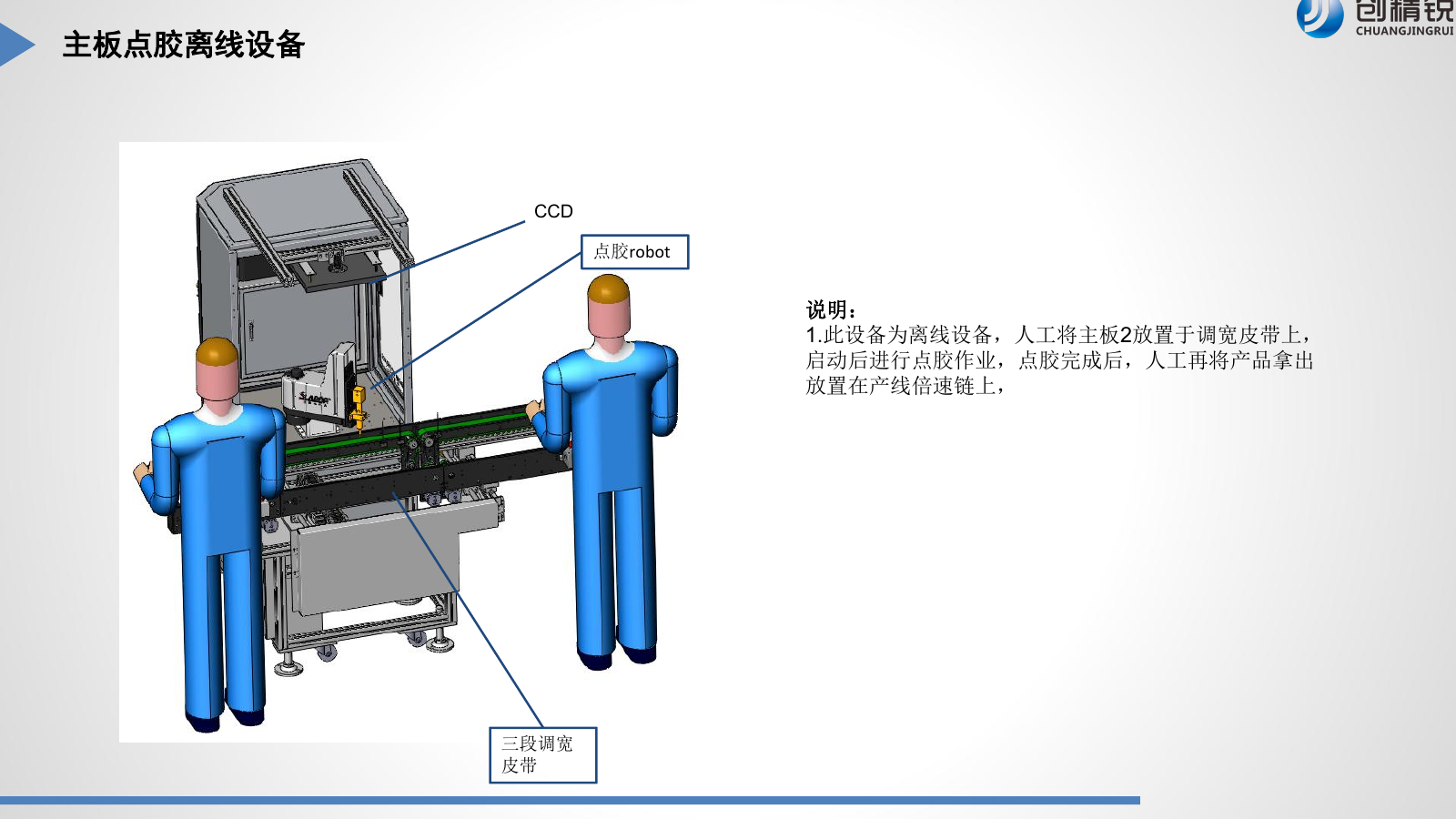
The dispensing station uses robot motion for dispensing range and efficiency. The dispensing head is configured with a pneumatic jet valve and CCD system to support dispensing path and precision control. The offline mainboard dispensing machine lets an operator place mainboard 2 onto a width-adjustable three-section belt; after dispensing, the operator removes the product and returns it to the double-speed chain line.
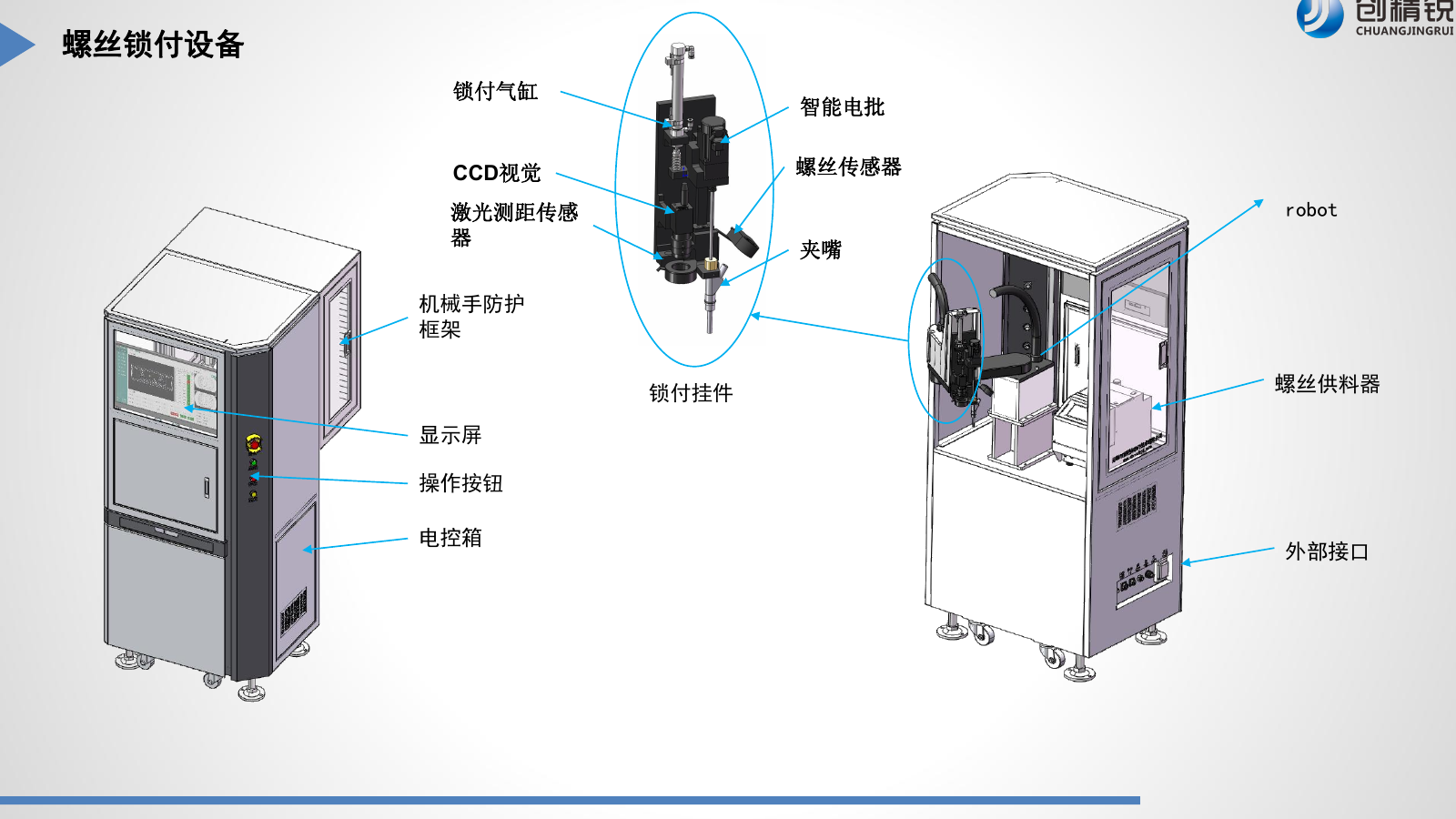
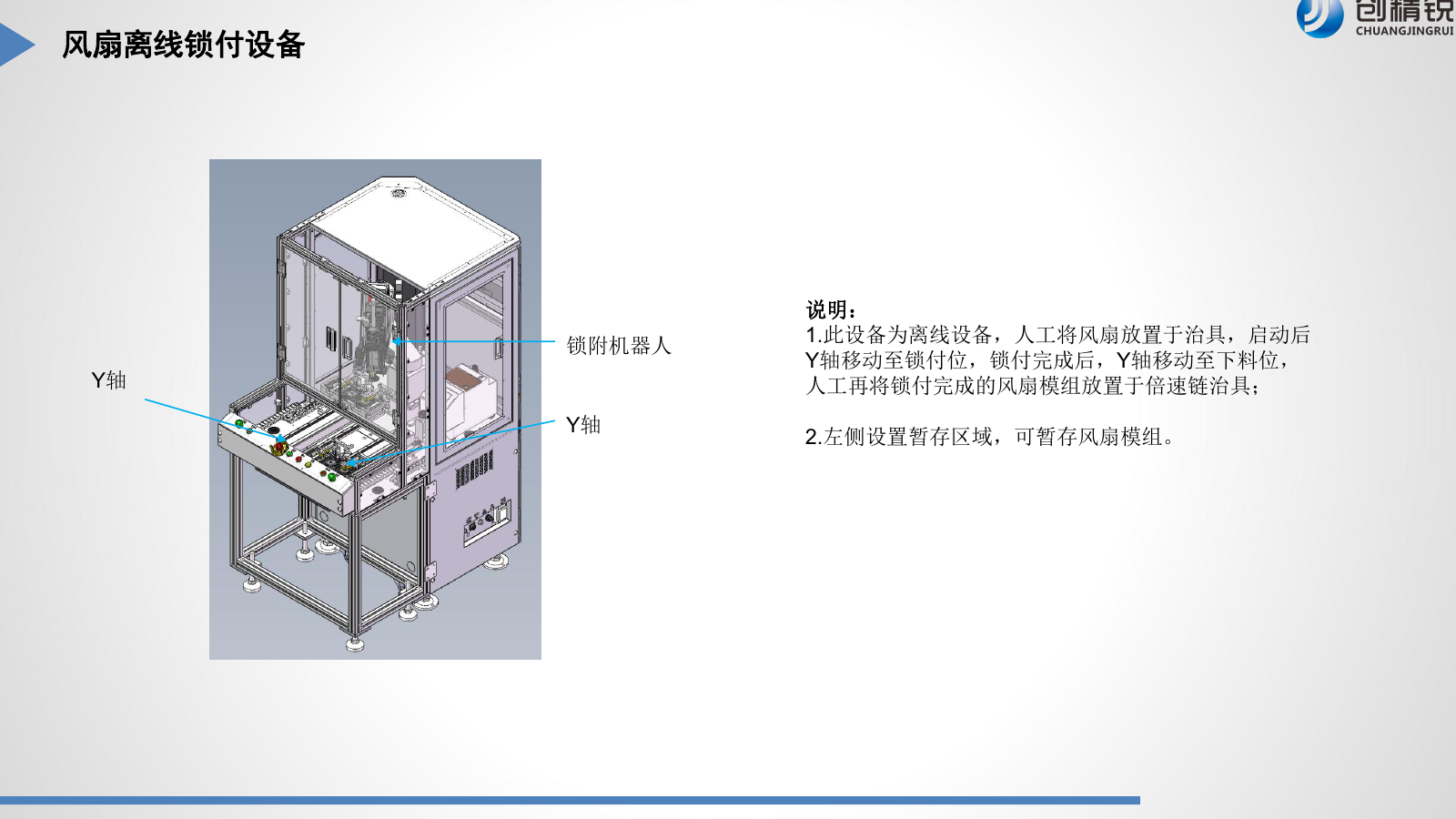
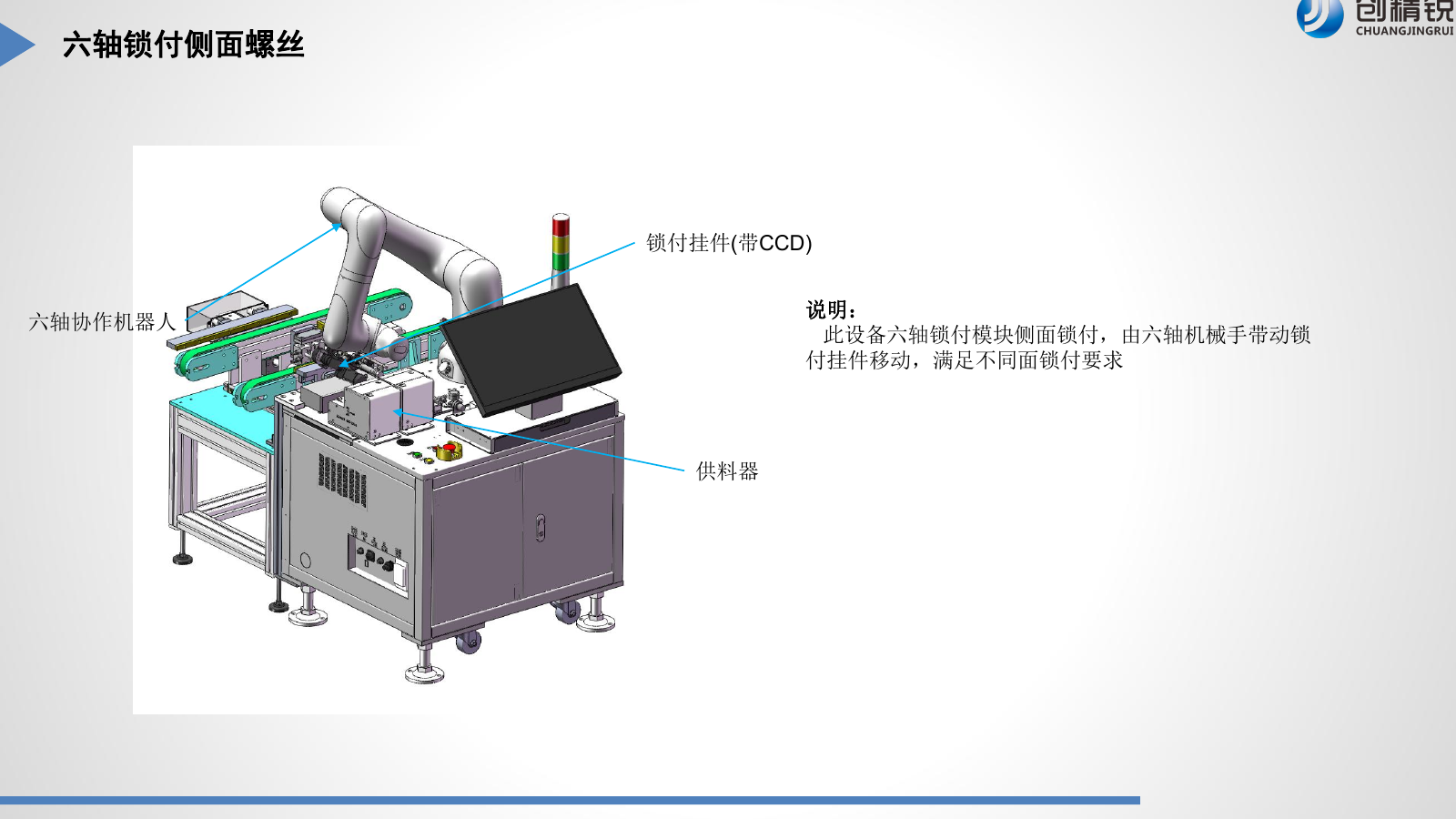
The screw fastening equipment includes screwdriving cylinder, intelligent electric screwdriver, screw sensor, CCD vision, laser distance sensor, robot, gripper nozzle, screw feeder, display, operation buttons, electrical cabinet and external interface. The offline fan screw fastening station uses a robot and Y-axis movement: the operator places the fan in a fixture, starts the cycle, the Y axis moves to fastening, then returns to unloading for manual transfer back to the carrier.
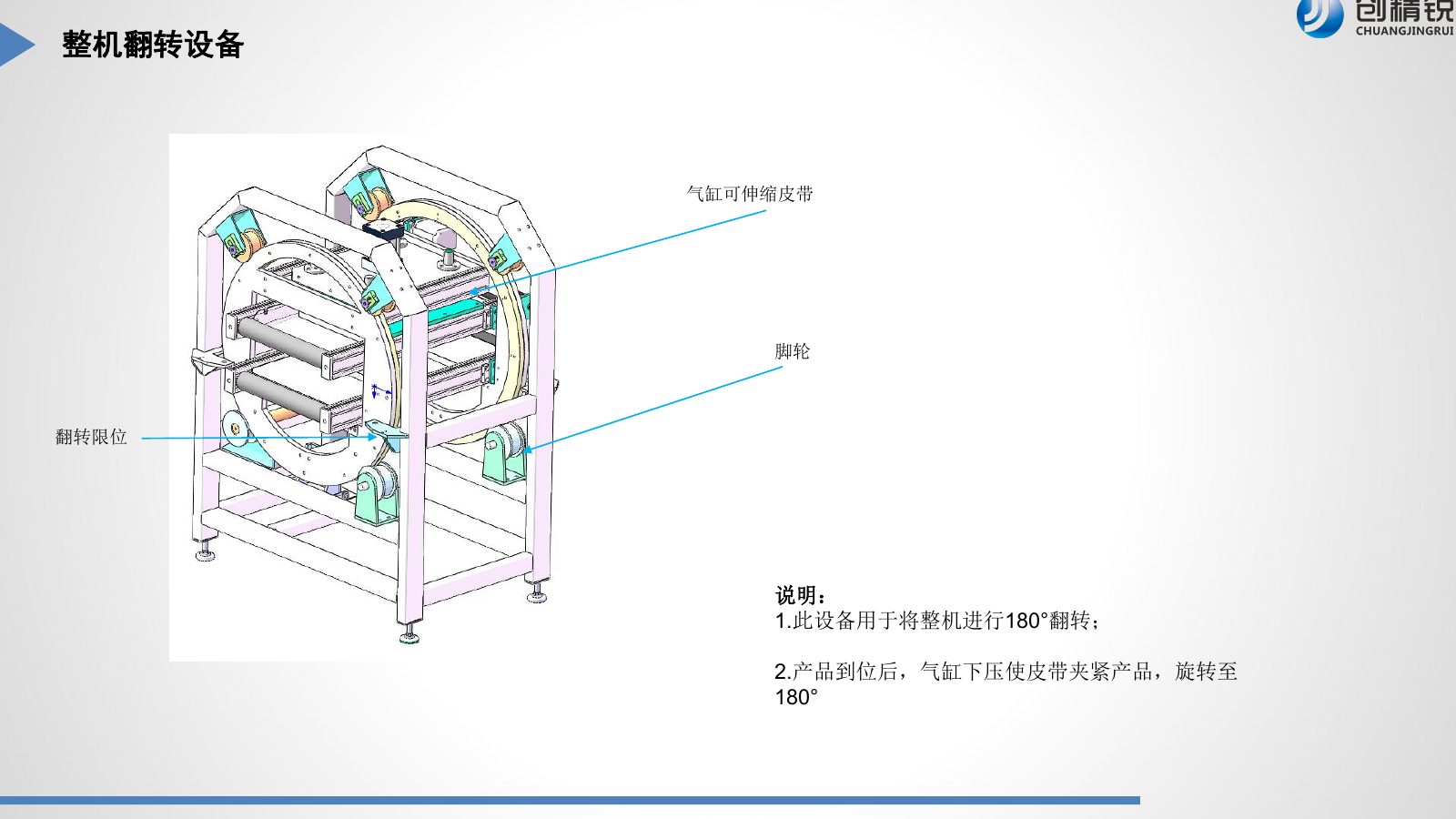
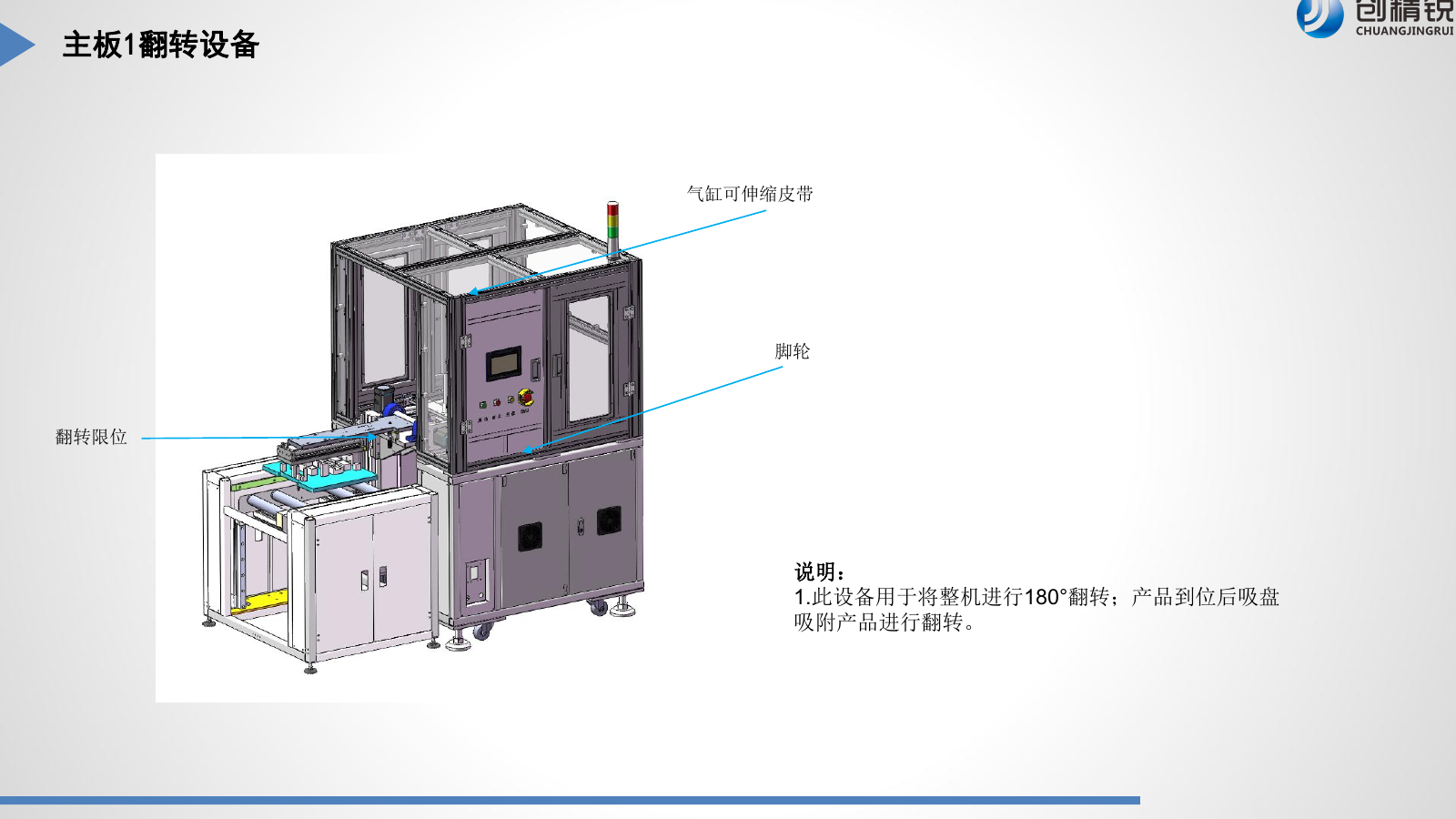
The module turnover station performs 180-degree turnover. After product arrival, a cylinder clamps the product with retractable belts and rotates it 180 degrees. The mainboard turnover station also performs 180-degree turnover, using suction to hold the product during flipping.
Carrier, data and software package
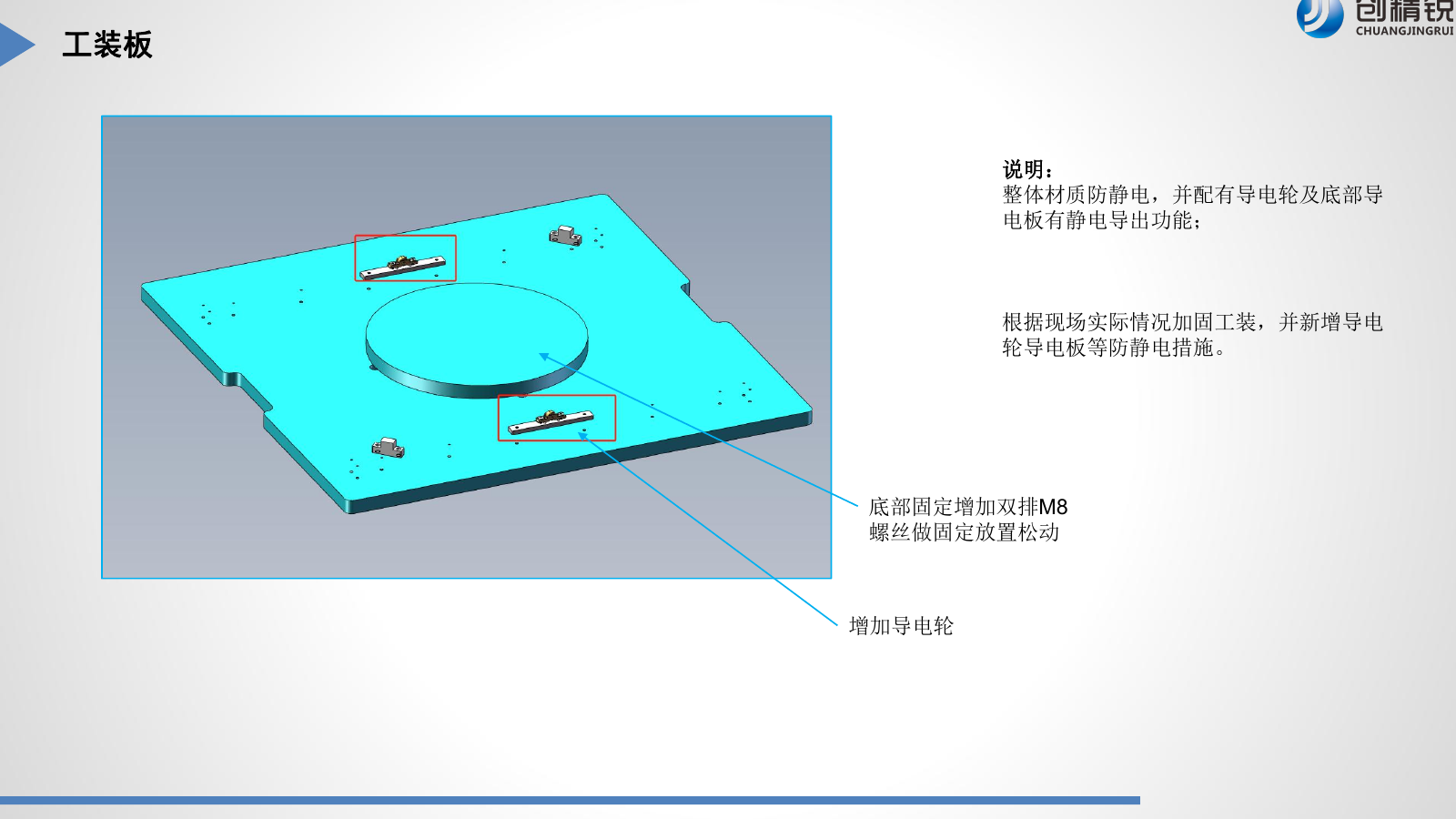
The carrier-board plan uses anti-static material and adds conductive wheels and a bottom conductive plate for static discharge. The carrier is reinforced for site use, and double-row M8 screws are added at the bottom fixing position to reduce loosening risk.
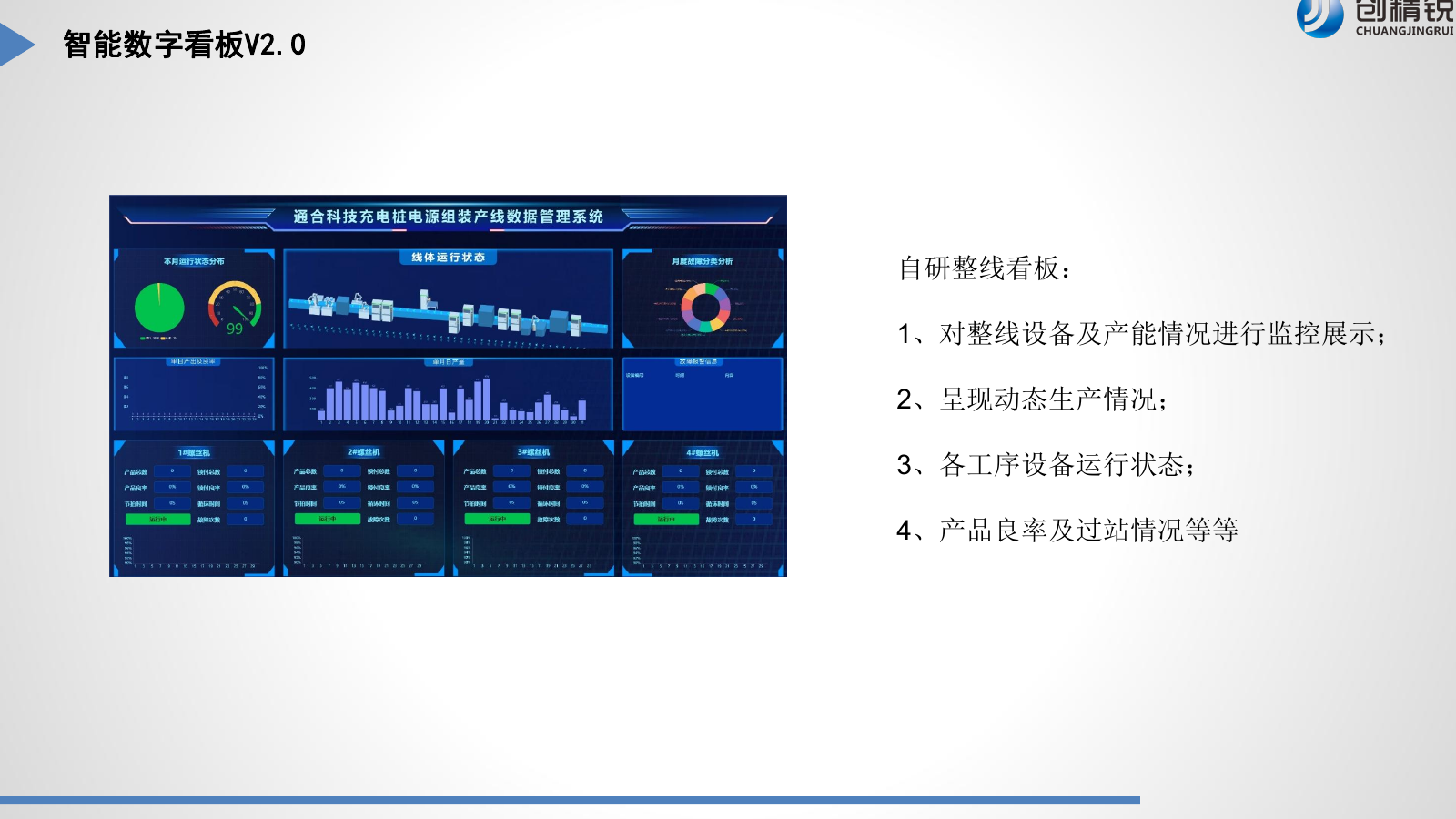
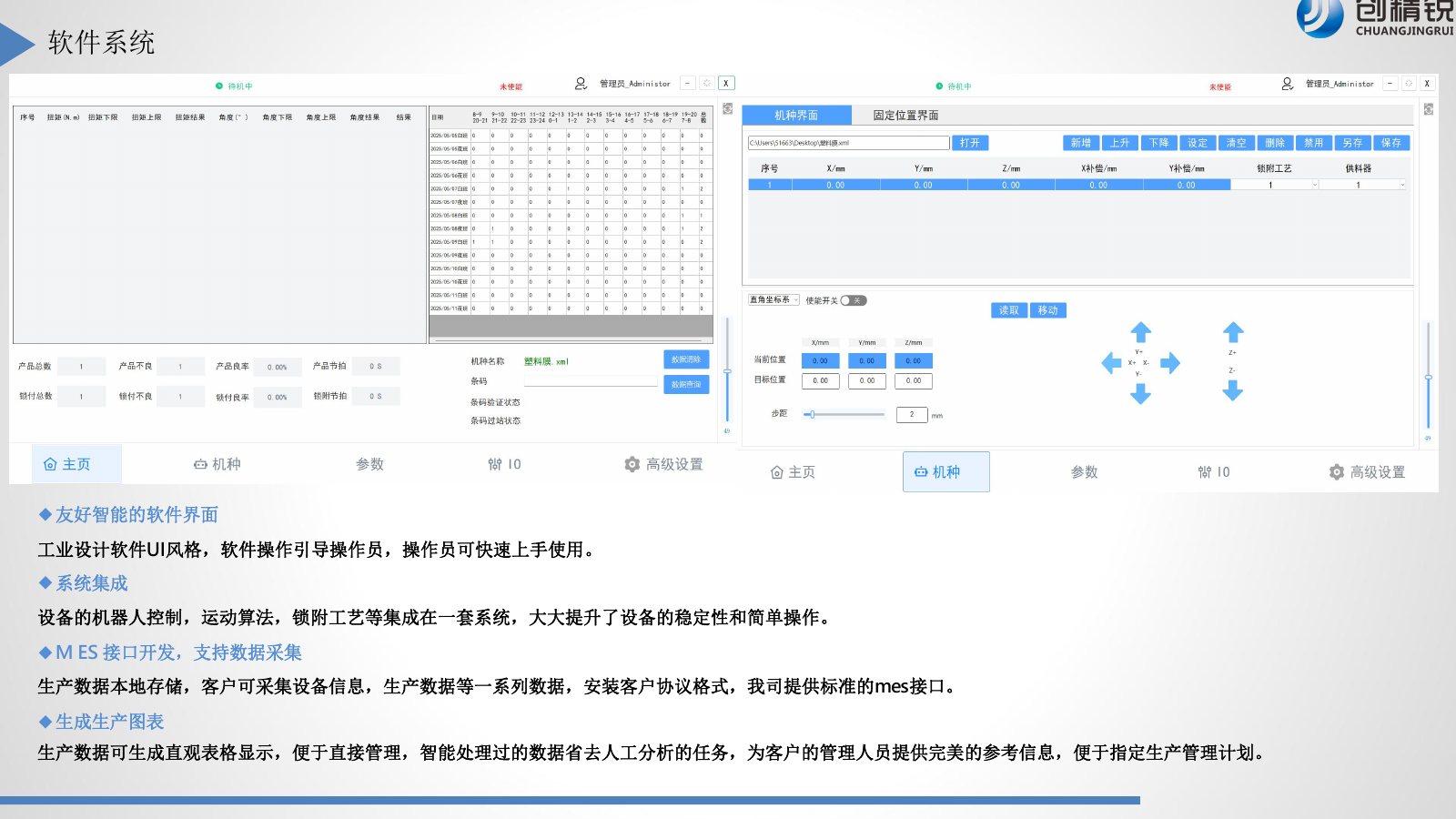
The digital line dashboard monitors full-line equipment and capacity, dynamic production status, station operating status, product yield and pass-through data. The software system provides guided operator UI, integrated robot control, motion algorithms and screw-fastening process controls. It also supports local storage, data collection and a standard MES interface for equipment and production data.
Outcome
Proposed operating result
The resulting concept turns a multi-station EV charging power-supply assembly route into a more structured full-line automation plan. It defines the line layout, conveyor strategy, warehouse buffering, robot workstations, offline equipment handoffs, carrier-board improvements and production-data layer.
Process value
The key value is system-level coordination. Instead of treating dispensing, screw fastening, turnover, testing and storage as isolated equipment islands, the concept links them through carrier flow, buffer capacity, repair access, dashboard visibility and MES-ready data collection. The available project data does not include equipment investment, labor saving or payback period, so we do not assign an ROI figure.
Project Feedback
Share a short review of this case study or tell us what kind of automation project you want to compare it with.
No published reviews yet.