
AOI and Lead Forming for Automatic Transistor Ferrite-Bead Insertion and Forming Cell
AOI and Lead Forming cell for transistor separation, ferrite-bead insertion, dispensing, tray loading, barcode collection and bead/glue inspection.
See how we designed this project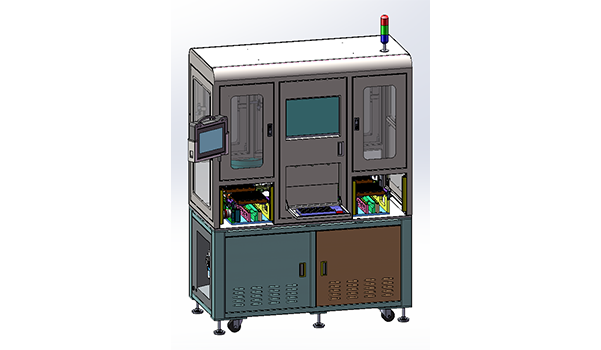
Project Snapshot
- Client Type
- Electronics Component Manufacturer
- Timeline
- Project dated 2025-10-22
- Deliverables
- Automatic transistor ferrite-bead insertion process
- Barcode collection and carrier transfer layout
- CCD inspection for bead placement and glue presence
- Reference machine dimension and labor comparison
Background
Project scope
We designed an automatic electronics component cell for transistor separation, ferrite-bead insertion, dispensing and tray loading. The machine is intended to replace a manual bead-insertion and dispensing flow with a controlled automated route that can feed transistor carriers, insert beads, dispense glue, inspect the result and unload finished carriers. That makes the scope an AOI and Lead Forming application for transistor ferrite-bead insertion, dispensing and tray loading.
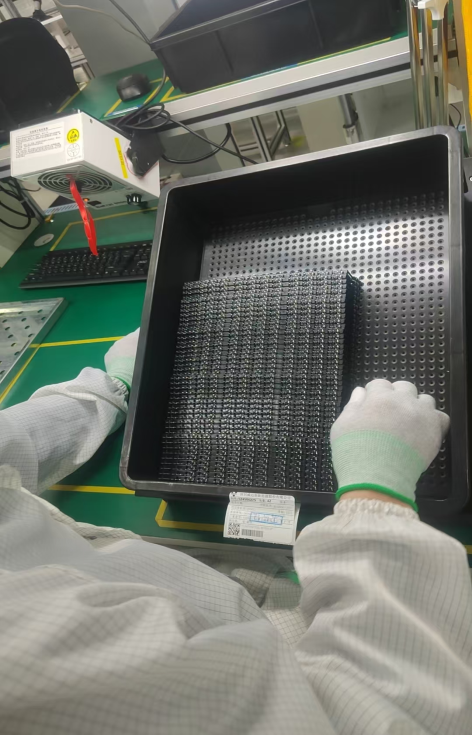
The operating comparison in the project data shows one operator for the automatic machine and three operators for the manual bead-insertion and dispensing process. The listed carrier throughput is 90 pieces per hour for the automatic route and 100 to 120 pieces per hour for the manual route, with the note that output varies by the number of transistors on each carrier. We therefore treat this project primarily as a labor reduction, consistency and inspection-control case rather than claiming a higher raw hourly rate.
Challenge
Multi-process integration
The machine has to coordinate carrier feeding, transistor transfer, bead feeding, bead insertion, glue dispensing, bead-position inspection, glue-presence inspection and final unloading. Each step depends on carrier positioning and stable transistor handling, so the layout needs more than a simple feeder-to-dispenser chain.
Inspection before release
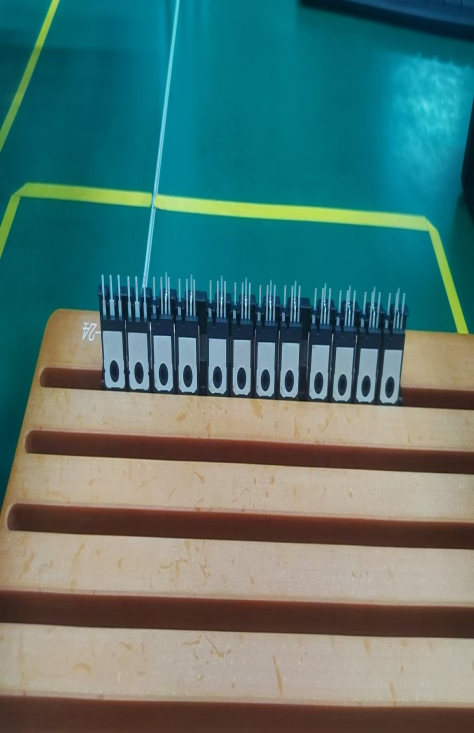
The project includes CCD inspection for ferrite-bead placement and CCD inspection for glue presence. It also references an optional connected-axis flip check to identify missing glue caused by bead drop or displacement. That inspection requirement is central because a bead-insertion cell without verification can simply move defects downstream faster.
Approach
Process layout
We configured the full-machine process around A/B non-stop loading and unloading, carrier pushing, a waiting position, barcode collection, ferrite-bead bowl feeding, bead insertion, bead pressing, transistor guide-rail transfer, X-axis carrier motion, dispensing, CCD inspection and final carrier unloading.
For a related electronics component application, we also describe this combined inspection and forming logic in our AOI and lead forming case study, where part feeding, forming control, CCD verification and finished-carrier handling are treated as one automation route.
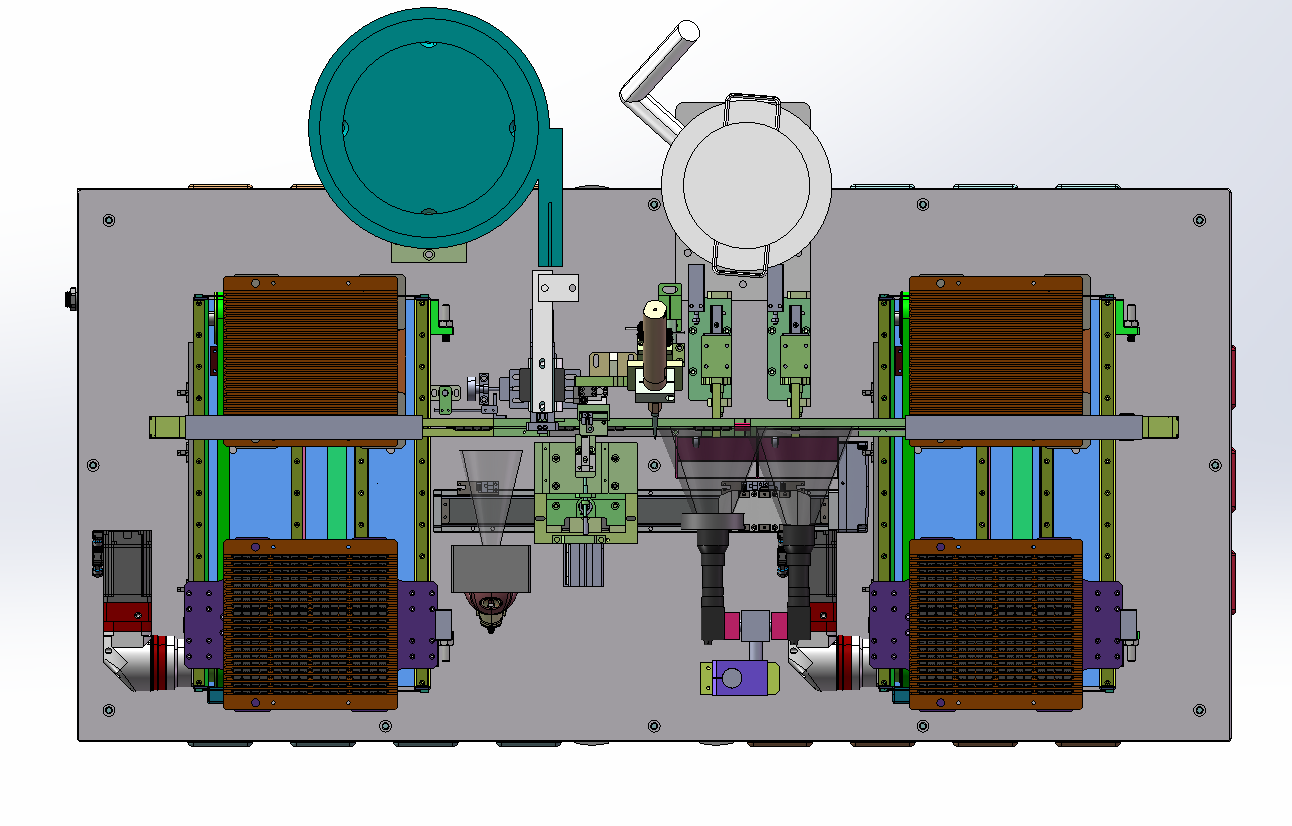
| Station | Confirmed function |
|---|---|
| A/B non-stop loading position | Keeps carrier feeding available without stopping the process |
| Carrier pusher | Push distance can be set |
| Barcode collection assembly | Captures carrier or product information before processing |
| Ferrite-bead vibration bowl | Feeds beads into the insertion station |
| Bead insertion module | Places ferrite beads onto the transistor carrier |
| Bead pressing module | Presses the bead into position |
| Dispensing module | Applies glue after bead insertion |
| CCD bead inspection | Checks ferrite-bead presence or placement |
| CCD glue inspection | Checks whether dispensing is present |
| A/B non-stop unloading position | Supports continuous carrier discharge, with settable unloading position |
Bead insertion and sizing
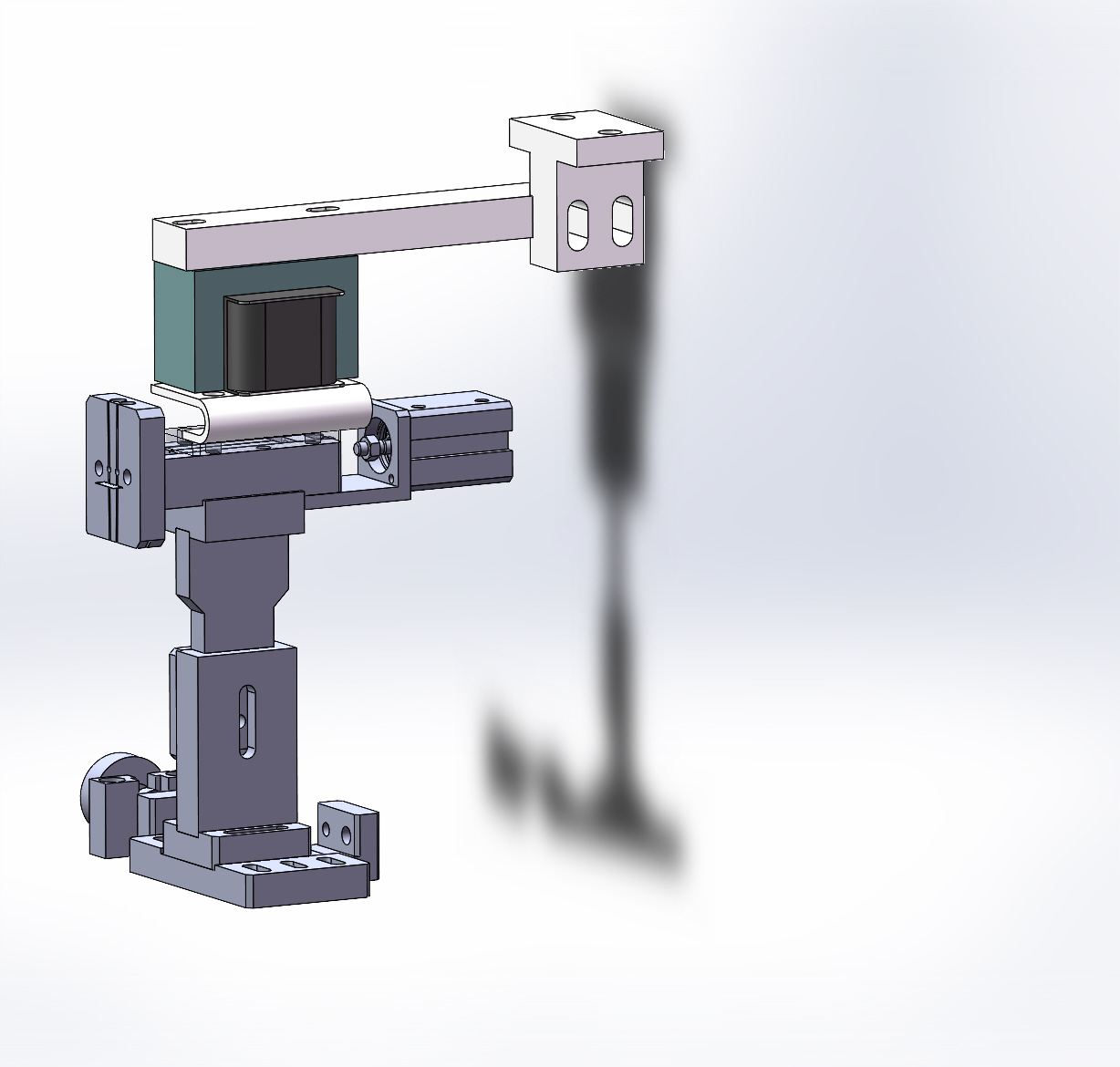
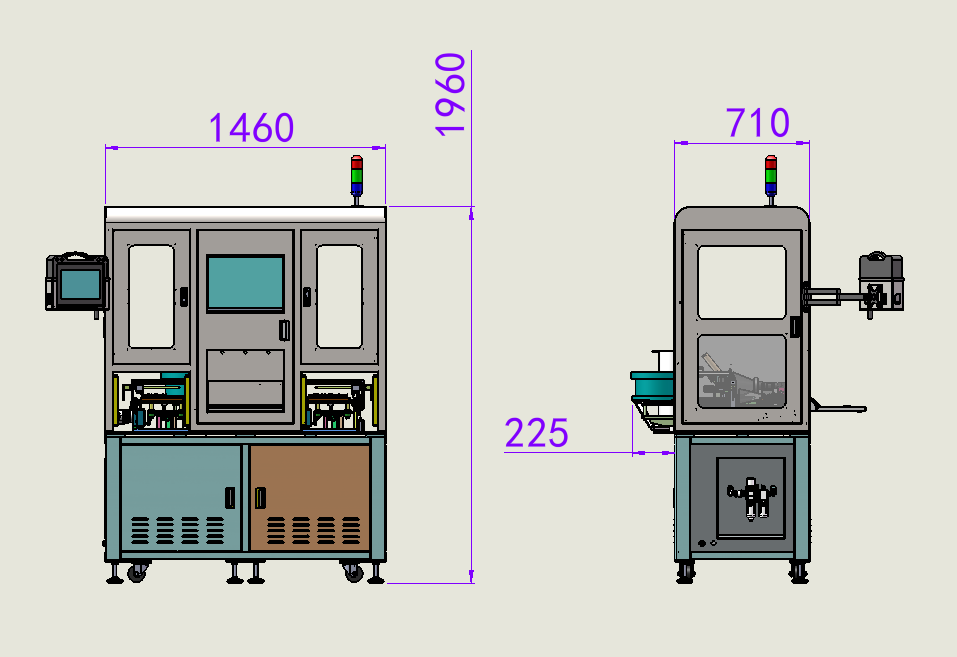
The bead-feeding and insertion section uses a dedicated insertion mold. The reference dimension drawing lists a machine footprint of 1,460 mm by 710 mm and a height of 1,960 mm. We keep this as a planning value rather than a final installed size because the drawing is marked as a dimensional reference.
Outcome
Proposed operating result
The proposed cell consolidates transistor carrier handling, bead insertion, dispensing, CCD inspection and tray loading into one automated machine. It reduces the operator requirement from three people in the manual reference process to one operator in the automated route, while adding barcode collection and inspection control.
Practical value
The data does not include investment amount or payback information, so we do not assign an ROI figure. The confirmed value is process control: A/B loading and unloading, adjustable push and unload positions, ferrite-bead insertion tooling, glue-presence detection and a defined inspection path before finished carriers leave the machine.
Project Feedback
Share a short review of this case study or tell us what kind of automation project you want to compare it with.
No published reviews yet.