
Automated Lead Forming Equipment for Varistor Sleeve Heat-Shrink Forming Machine
Automated Lead Forming Equipment for bulk varistors and discharge tubes, combining bowl feeding, sleeve loading, lead correction, cutting, heat shrinking and unloading.
See how we designed this project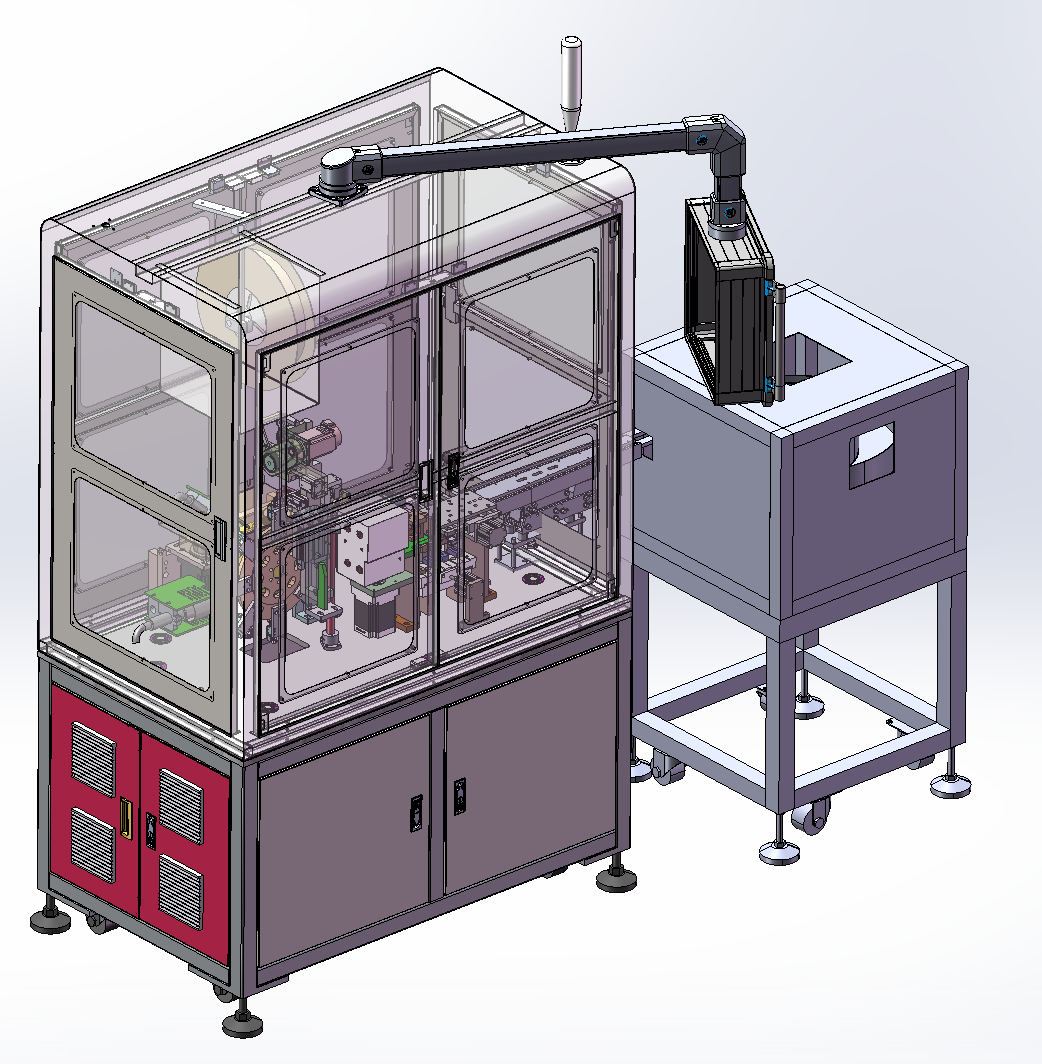
Project Snapshot
- Client Type
- Electronics Manufacturer
- Timeline
- Project dated 2025-08-29
- Deliverables
- Vertical sleeve forming machine layout
- Four-station manipulator loading and lead-cutting route
- Eight-station rotary sleeve insertion and heat-shrink process
- Reference utility, capacity and operator requirements
Background
Project scope
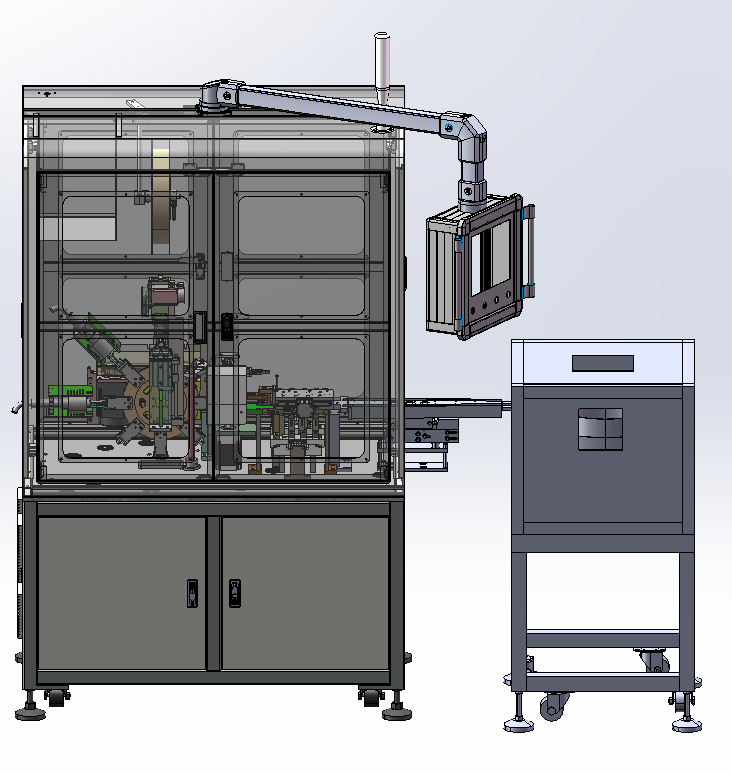
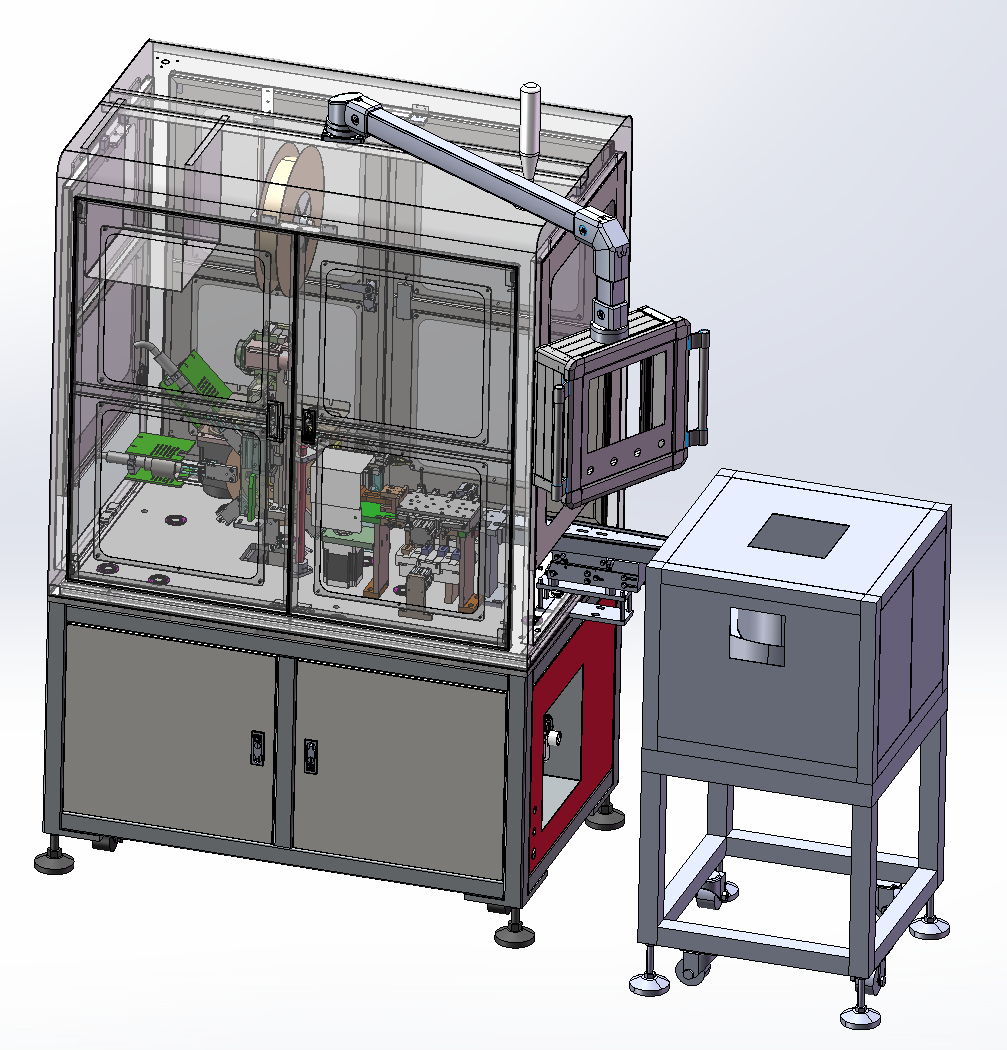
We designed a vertical electronics component sleeve forming machine for bulk varistors and discharge tubes. The machine combines vibratory bowl feeding for bulk varistors, manual sleeve-roll loading, manipulator handling, lead correction, lead cutting, rotary clamping, sleeve insertion, hot-air heat shrinking, cooling and finished-part unloading. That makes the scope an Automated Lead Forming Equipment application for varistor sleeve feeding, heat shrinking, cooling and unloading.
The equipment is built as a single-machine station. Operators load bulk varistors into the vibratory bowl and place the sleeve roll onto the support position; the machine then handles the component transfer, sleeve application and heat-shrink forming sequence.
Challenge
Integrating sleeve forming after lead preparation
The process has to prepare the component before sleeving. The four-station manipulator route includes clamping, correction, lead cutting and transfer to the clamping position. Only after that preparation step can the product move onto the eight-station turntable for sleeve insertion and heat shrinking.
Heat-shrink control with downstream cooling
The sleeve process is not finished at insertion. The line has to shrink the sleeve with hot air, cool the part and unload it without mixing finished product with lead-cutting waste. The equipment therefore includes hot-air heat-shrink components, air cooling, unloading and a waste-bin section.
Approach
Process sequence
The operating route is:
- Feed bulk varistors through the vibratory bowl.
- Load the sleeve roll onto the support position.
- Use the manipulator to clamp, correct and cut leads.
- Transfer the prepared product to the rotary clamping position.
- Move the product onto the eight-station turntable.
- Detect product presence with a fiber sensor.
- Insert the sleeve.
- Heat-shrink the sleeve at the fourth and fifth stations with hot air.
- Cool the product at the sixth station.
- Unload finished product at the seventh station.
- Collect cutting waste in the waste-bin section.
Functional modules
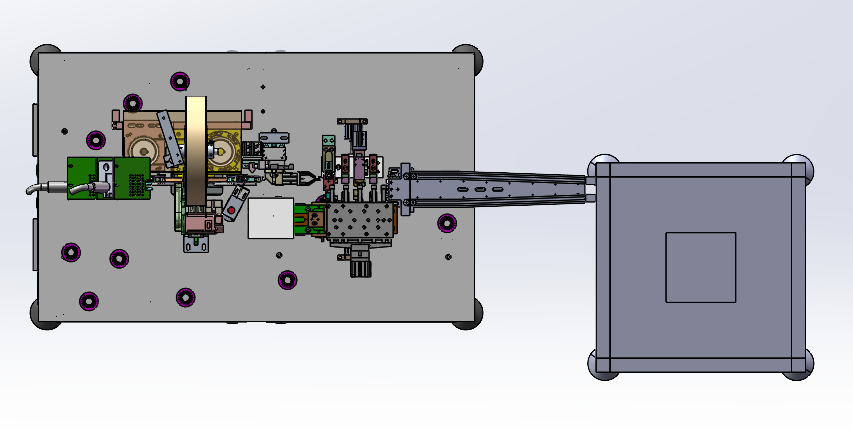
The machine consists of a vibratory bowl feeding module, a four-station manipulator loading module, rotary clamping, an eight-station turntable, detection module, sleeve hot-air heat-shrink module, unloading module and waste-bin module.
For a related Robotlyne automated lead forming application, see our NTC sensor automated lead forming equipment case study: https://www.robotlyne.com/ntc-sensor-automated-lead-forming-equipment-case-study/
| Module | Confirmed role |
|---|---|
| Vibratory bowl feeding | Feeds bulk varistors into the station |
| Four-station manipulator | Clamps, corrects, cuts leads and transfers product to the clamping position |
| Rotary clamping | Moves prepared parts onto the eight-station turntable |
| Detection station | Uses fiber sensing to confirm product presence |
| Sleeve station | Applies sleeve material before heat shrinking |
| Hot-air stations | Fourth and fifth stations perform hot-air heat shrinking |
| Cooling station | Sixth station performs air cooling |
| Unloading and waste sections | Separate finished product unloading from lead-cutting waste collection |
Reference specifications
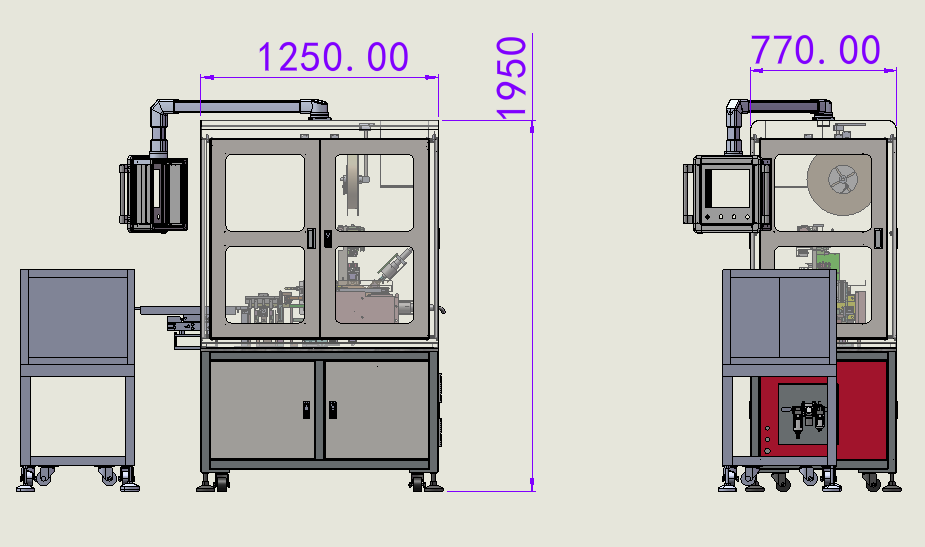
The reference machine size is 1,250 x 770 x 1,950 mm, L x W x H. The required air supply is 0.5 to 0.6 MPa, the power supply is AC220V, and the control package uses PLC plus an industrial computer. The listed capacity is 800 to 1,200 pieces per hour for one machine, with one operator required.
| Item | Confirmed specification |
|---|---|
| Reference size | 1,250 x 770 x 1,950 mm, L x W x H |
| Air supply | 0.5 to 0.6 MPa |
| Power supply | AC220V |
| Capacity | 800 to 1,200 pieces per hour |
| Control | PLC plus industrial computer |
| Operator count | 1 operator |
Outcome
Proposed operating result
The resulting station turns sleeve forming into a defined automatic route: bulk feeding, lead preparation, rotary transfer, sleeve application, two hot-air shrinking stations, cooling, unloading and waste separation.
Process value
The practical value is compact integration. A single operator can support bulk feeding and sleeve-roll loading while the machine handles correction, cutting, sleeve forming and unloading. The available project data does not include equipment price, labor saving or payback period, so we do not assign an ROI figure.
Project Feedback
Share a short review of this case study or tell us what kind of automation project you want to compare it with.
No published reviews yet.