
Fully Automated Assembly Line for Single-End Finished Product Air-Test Line
Fully Automated Assembly Line for single-end finished sensors, combining fixture-frame loading, conveyor transfer, hipot testing, resistance testing and NG cutting.
See how we designed this project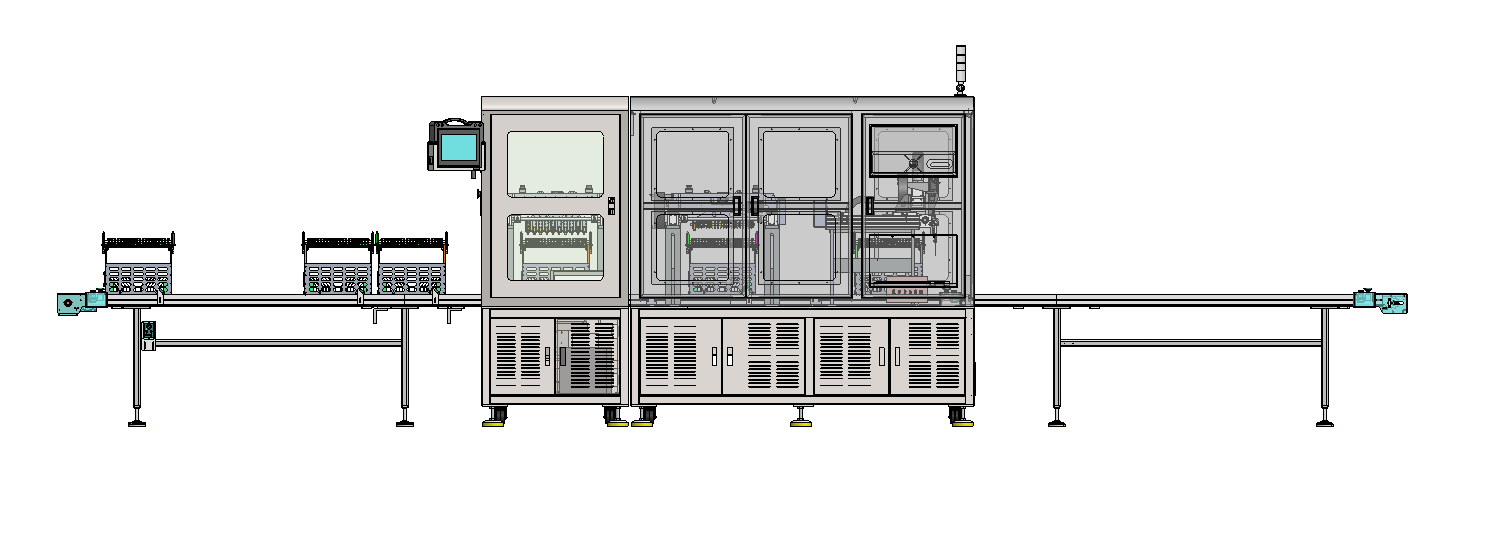
Project Snapshot
- Client Type
- Electronics Manufacturer
- Timeline
- Project dated 2025-06-26
- Deliverables
- Inline finished-product hipot and resistance test route
- Fixture-frame and wire-card holding scheme
- Transfer pick-and-place module between test positions
- NG cutting and reject-removal station
Background
Project scope
We designed an inline electronics sensor testing machine for single-end finished components that need insulation withstand-voltage testing and room-temperature air-state resistance testing. The line is arranged so operators load clamped wire frames onto the infeed conveyor, the product flows through the hipot and resistance test stations, NG parts are cut at a reject station, and the tested fixture frames reach the manual unloading end. That makes the scope a Fully Automated Assembly Line application for finished product hipot and resistance testing in air.
The product length range is separated into three groups: 50 to 200 mm, 200 to 400 mm and 400 to 600 mm. For length changeover, the equipment plan uses different fixture frames and wire-card plates.
Challenge
Testing without loose-piece handling
The line has to test finished single-end parts while they remain organized in fixture frames. That keeps the process compatible with manual upstream wire clamping, but it requires stable conveyor flow, frame positioning and test-head access at each station.
Length changeover and frame capacity
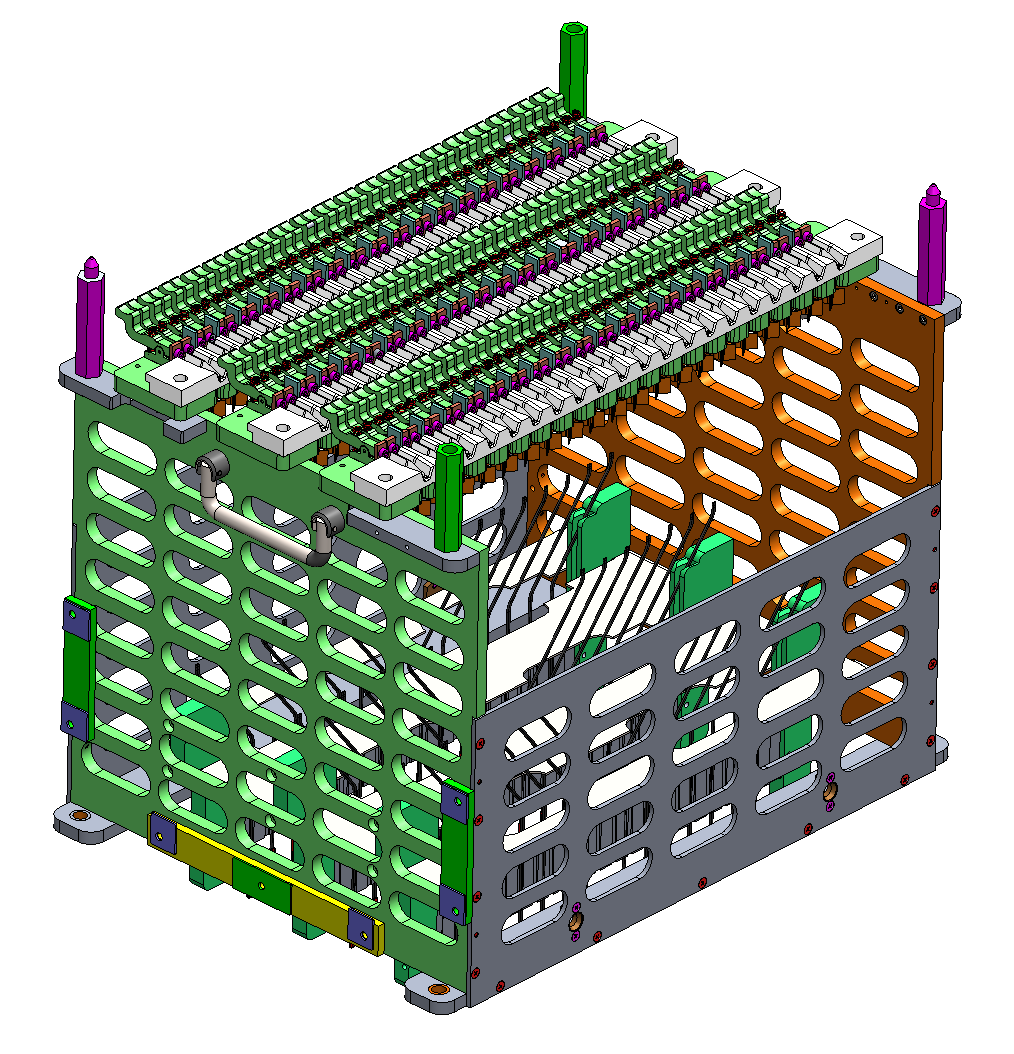
Each fixture frame holds three wire-card plates, and each plate holds 20 products. That gives 60 products per fixture frame. Since product lengths are grouped into three ranges, the fixture-frame and wire-card scheme is part of the operating plan rather than a minor accessory.
Approach
Line layout
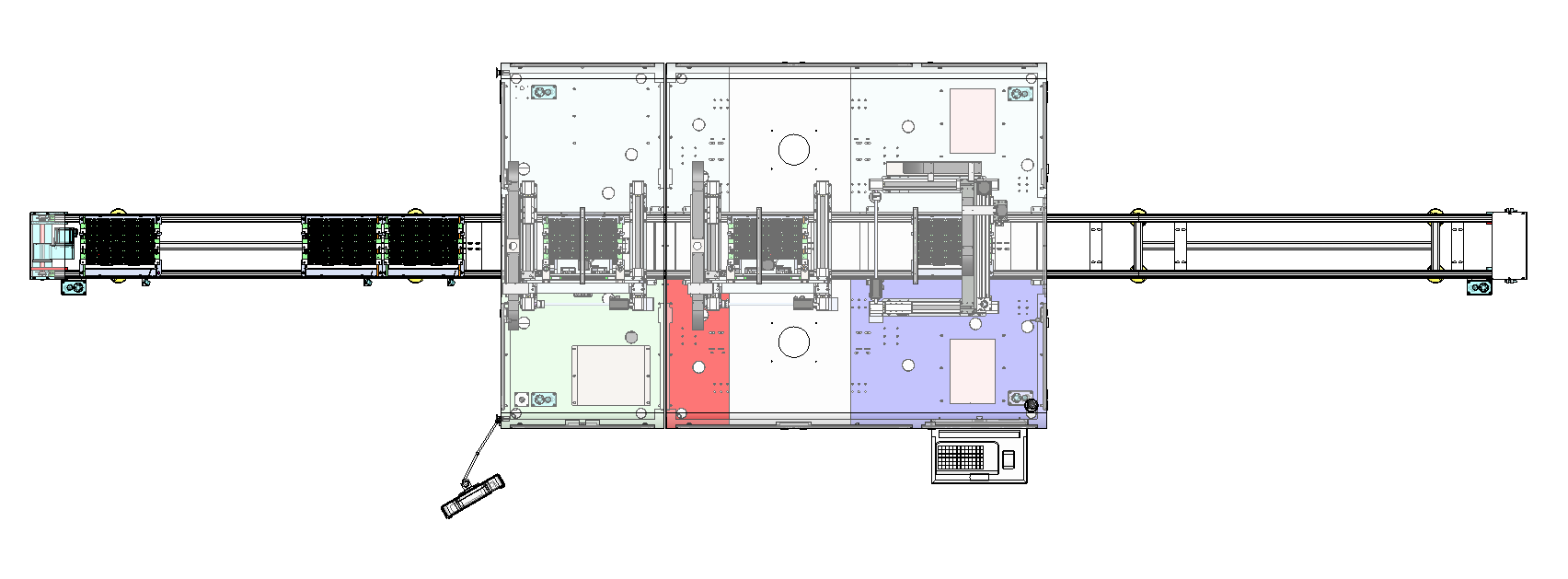
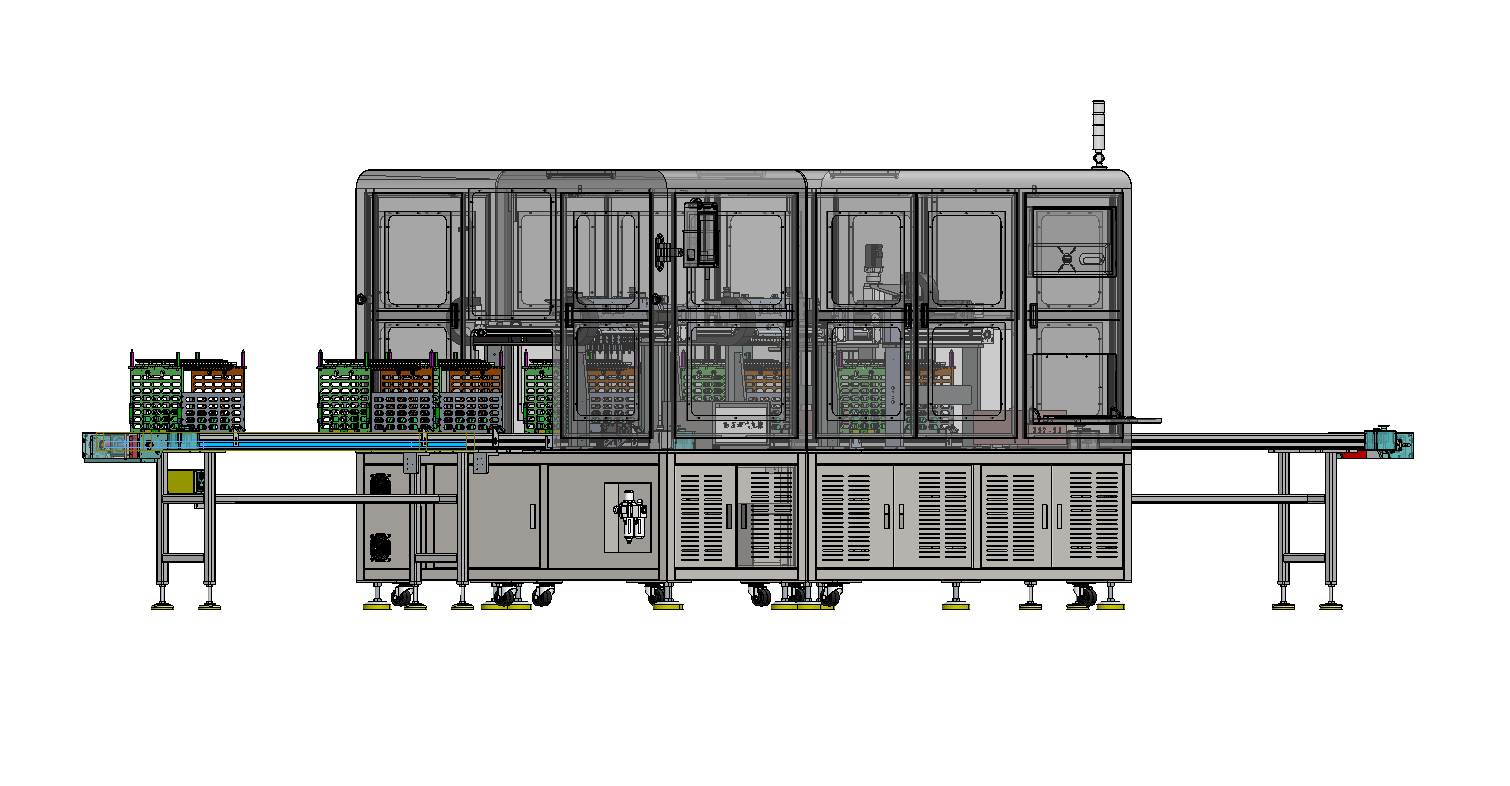
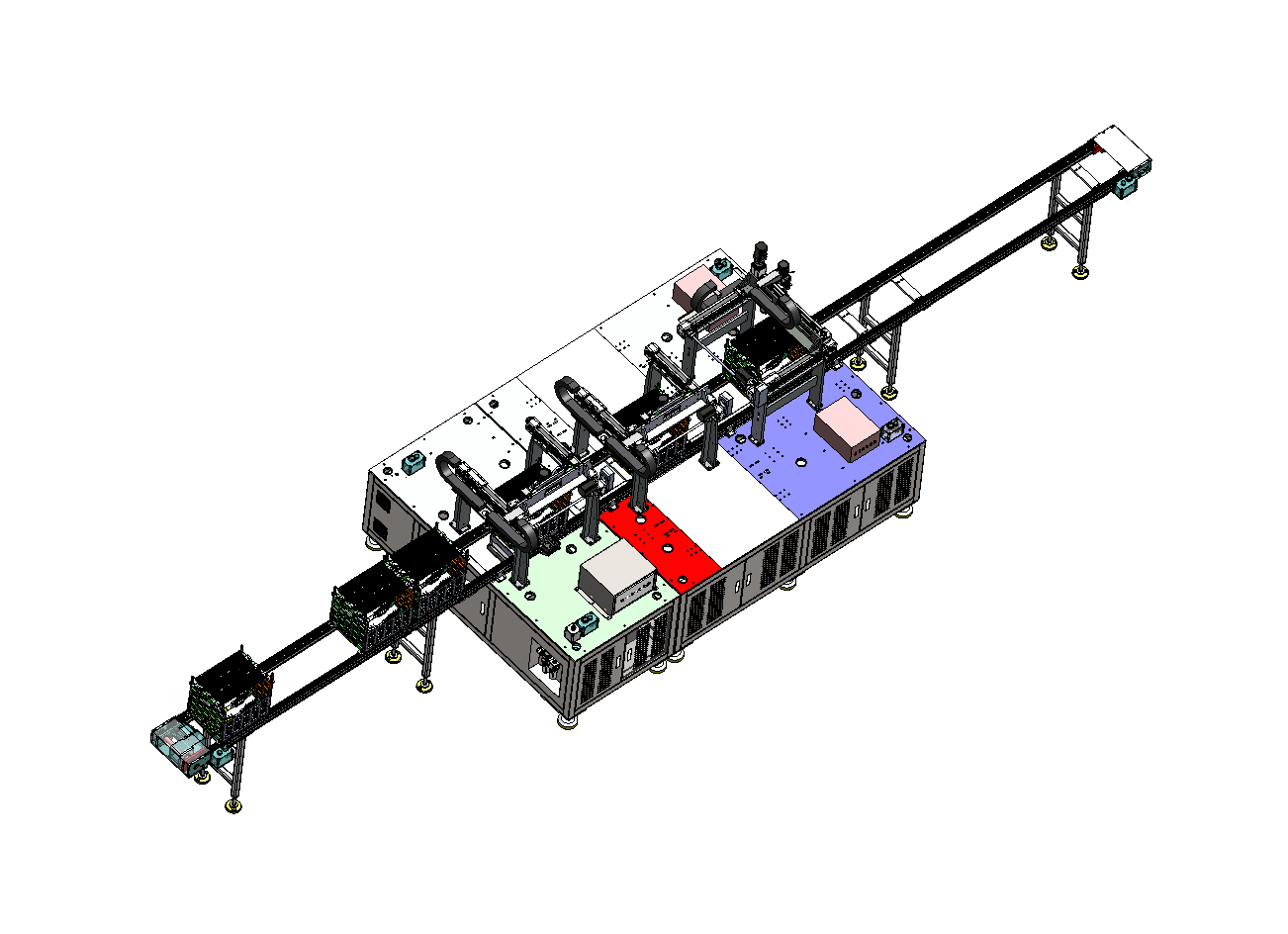
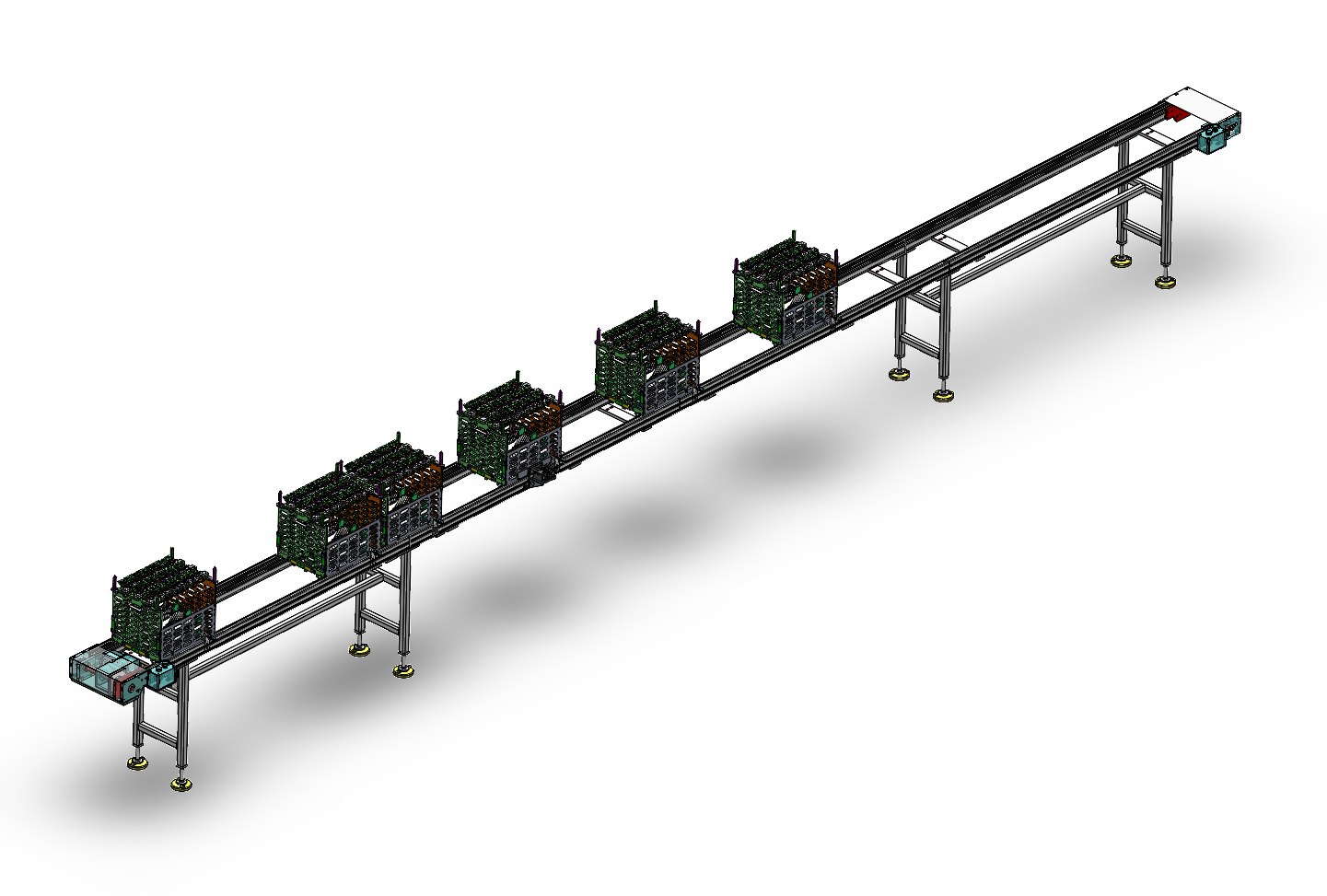
The equipment appearance drawings show an infeed conveyor, hipot test station, resistance test station, discharge conveyor and NG cutting station. The reference layout includes a full line length of 7,400 mm, a main machine length of 2,500 mm, a width reference of 1,600 mm, a height reference of 1,900 mm and conveyor-height references around 850 mm. The infeed and discharge conveyor lengths can be adjusted to fit the site, with the shortest listed conveyor length at 1 m.
For a related Robotlyne fully automated assembly-line application, see our home appliances fully automated assembly line case study: https://www.robotlyne.com/home-appliances-fully-automated-assembly-line-case-study/
Operating sequence
The process sequence is:
- Manually place the clamped wire frame onto the conveyor.
- Feed fixture frames continuously into the machine.
- Transfer into the hipot test station.
- Transfer into the resistance test station.
- Transfer into the discharge station.
- Cut NG parts at the reject station.
- Manually remove the tested fixture frame.
Test and reject modules
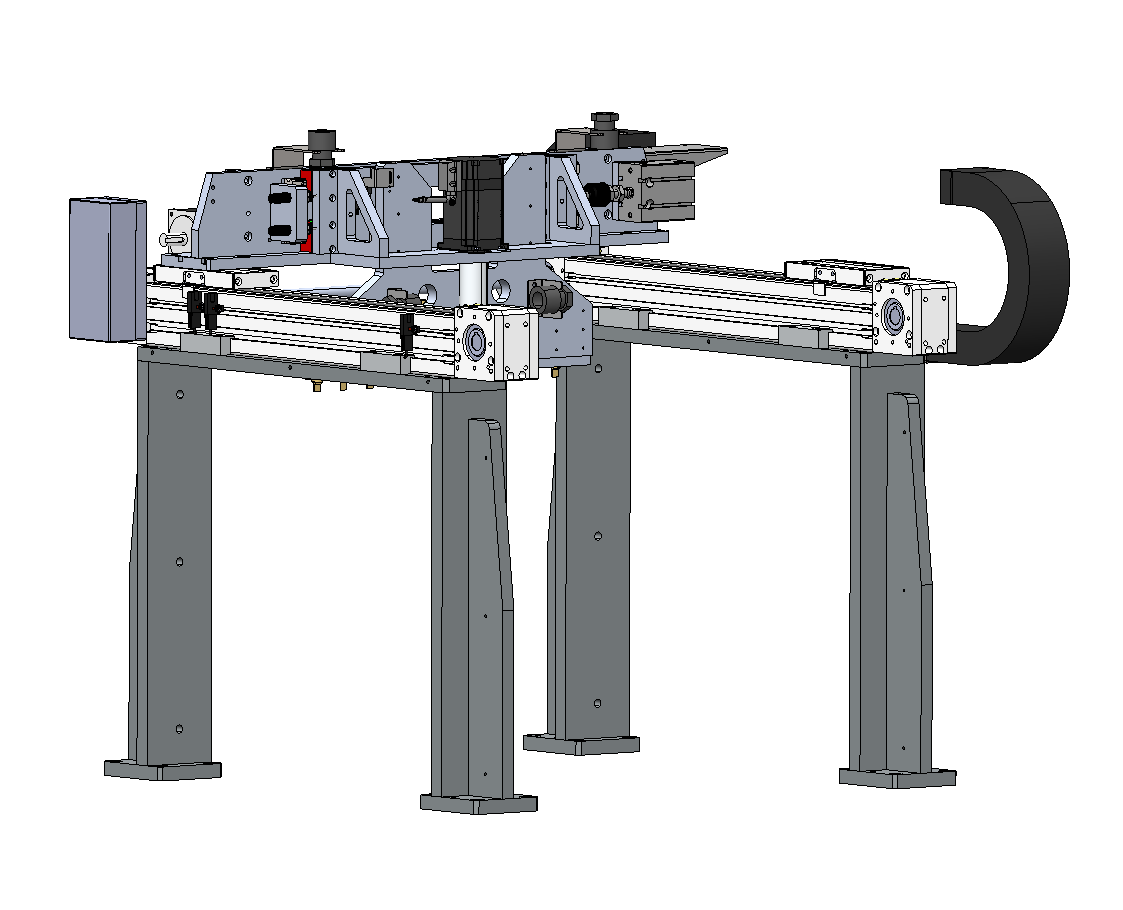
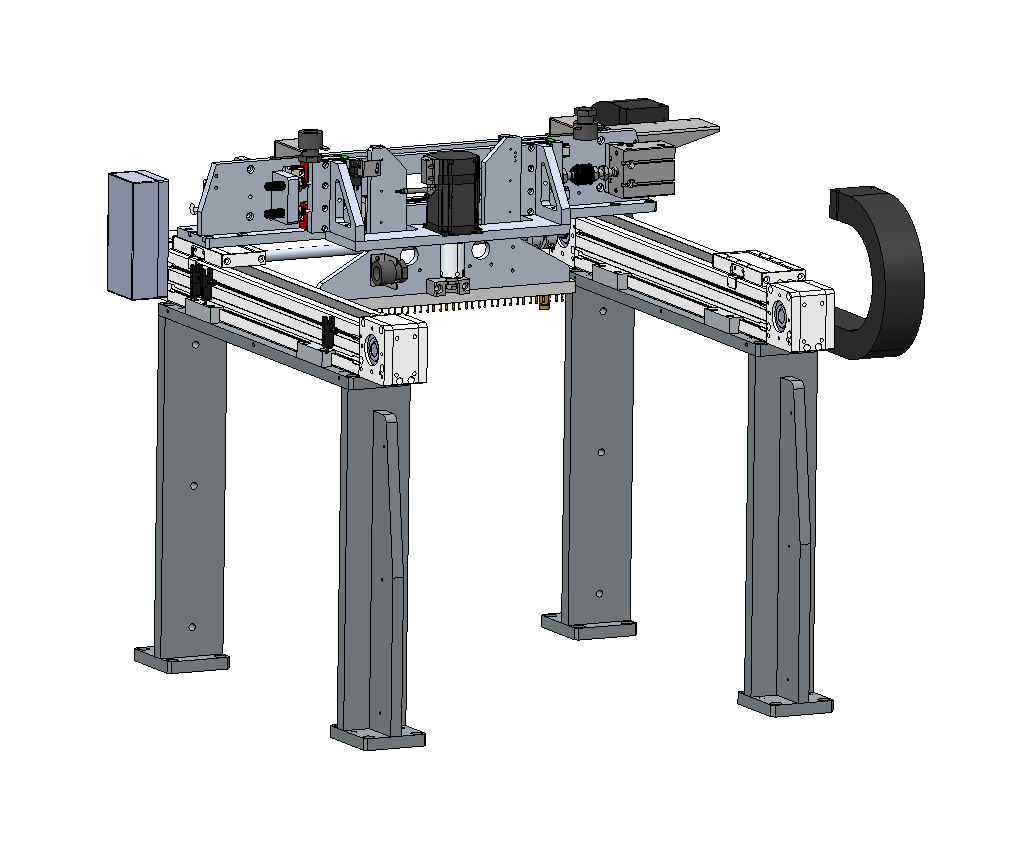
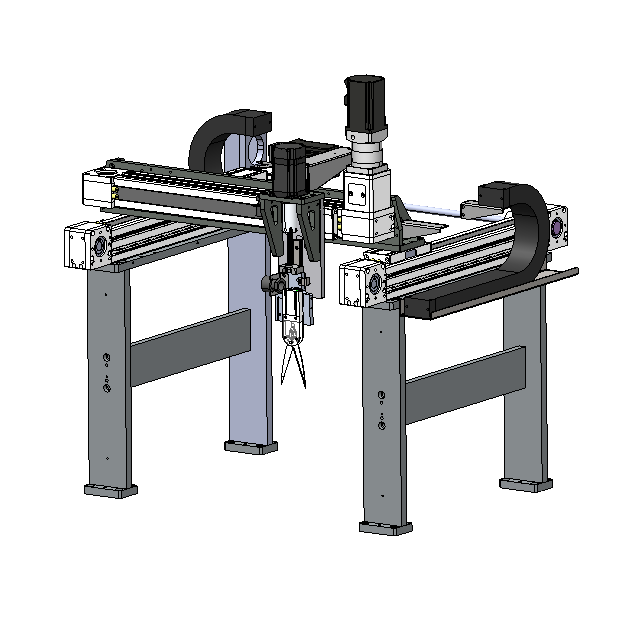
The machine is organized around one control system and one touch screen. The module plan includes a fixture frame, infeed conveyor, discharge conveyor, resistance meter, resistance machine frame, hipot meter, hipot machine frame, transfer pick-and-place unit and NG reject assembly.
| Module | Confirmed role |
|---|---|
| Fixture frame | Holds three wire-card plates, with 20 products per plate |
| Hipot test station | Uses locating cylinder, lift motor, drag chain, Y-axis module, support frame and test head |
| Resistance test station | Uses locating cylinder, lift motor, drag chain, Y-axis module, support frame and test probes |
| NG reject station | Uses locating cylinder, lift motor, drag chain, Y-axis module, support frame and cutting/test-probe mechanism |
| Conveyors | Move loaded fixture frames through infeed, testing and discharge positions |
Outcome
Proposed operating result
The resulting line converts finished-product electrical testing into a fixture-frame-based inline process. It keeps manual loading and unloading where the incoming production flow requires operator handling, while automating the transfer through hipot testing, resistance testing and NG cutting.
Capacity and constraints
The stated line efficiency is 3,000 to 4,000 pieces per hour, excluding manual wire-clamping and tray-setting time. The available project data does not include investment amount, operating cost saving or payback period, so we do not assign an ROI figure.
Project Feedback
Share a short review of this case study or tell us what kind of automation project you want to compare it with.
No published reviews yet.