
Automatic Dust Removal Equipment for PCB Automatic Dust-Removal Workbench
Automatic Dust Removal Equipment for PCB cleaning, using manual loading, dual-side confirmation, ionized air, upper airflow, lower extraction and dust-bag collection.
See how we designed this project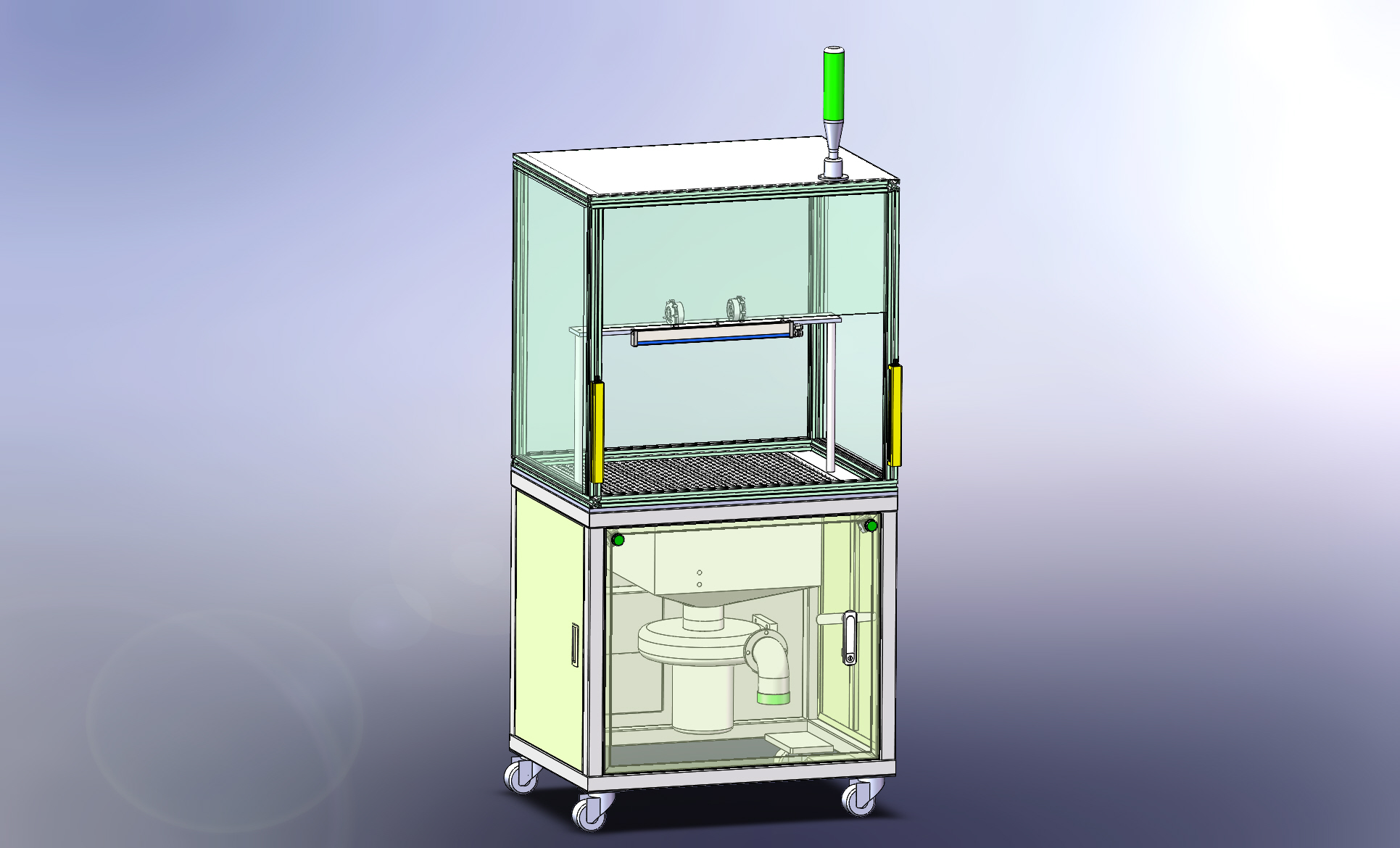
Project Snapshot
- Client Type
- Electronics Manufacturer
- Timeline
- Project dated 2025-07-10
- Deliverables
- PCB dust-removal workbench layout
- Ion bar, blower and lower exhaust airflow process
- Safety light curtain and confirmation-button operating method
- Reference utility and operator requirements
Background
Project scope
We designed a compact electronics manufacturing workbench for PCB surface dust removal. The equipment supports manual product placement on the work surface, operator confirmation, top-side air cleaning and lower exhaust collection. After one side is cleaned, the operator flips the product and confirms again so the same airflow and extraction process can clean the opposite side. That makes the scope an Automatic Dust Removal Equipment application for pcb surface dust removal.
The machine is intended for a manually attended station rather than a fully automatic conveyor line. The confirmed operating requirement lists one operator, AC220V power, 0.5 MPa air supply and relay-based control.
Challenge
Removing dust without spreading it
The cleaning action needs to dislodge particles from the product surface while preventing removed dust from escaping back into the operator area. The station therefore combines upper high-speed airflow and ionized air with a lower exhaust path and dust-bag collection.
Simple operator workflow
Because the product is loaded and flipped by hand, the workbench needs a clear confirmation method and a guarded working area. The layout includes confirmation buttons and a safety light curtain around the work opening.
Approach
Cleaning process
The operating sequence is deliberately short:
- The operator places the PCB or product onto the work surface.
- The operator confirms the cycle.
- The upper blower, ion bar and lower exhaust fan operate together.
- High-speed airflow removes surface contaminants.
- The exhaust fan extracts the removed dust into the lower collection path.
- Dust is collected in a dust bag.
- The operator flips the product and repeats the cycle for the opposite side.
For a related Robotlyne PCB cleaning application, see our PCB automatic dust removal equipment case study: https://www.robotlyne.com/pcb-automatic-dust-removal-equipment-case-study/
Functional layout
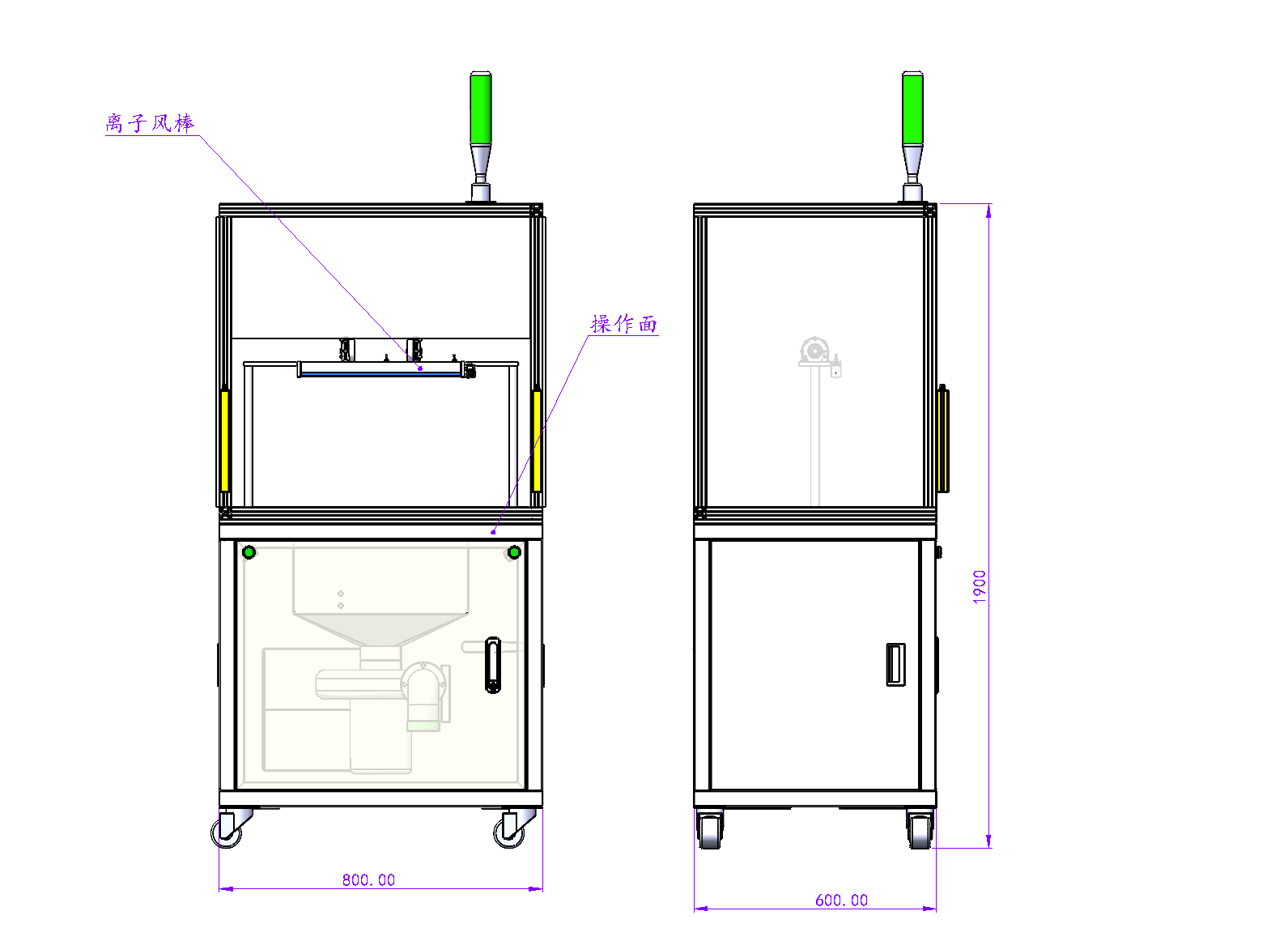
The workbench layout includes an upper ion bar, high-efficiency blower, confirmation button, safety light curtain, work surface, exhaust chamber, exhaust fan and dust-bag position. The structure keeps the air-delivery hardware above the work area while placing extraction and collection below the table.
| Item | Confirmed specification |
|---|---|
| Reference size | 800 x 600 x 1,900 mm, L x W x H |
| Air supply | 0.5 MPa |
| Power supply | AC220V |
| Control method | Relay control |
| Operator count | 1 operator |
| Capacity | Determined by production line conditions and dust-removal requirements |
Outcome
Proposed operating result
The finished station gives the production team a compact, manually attended PCB cleaning point with controlled airflow, static-control support from the ion bar and dust collection below the work surface.
Process value
The value of the station is practical containment: loosen dust with the blower and ion bar, pull the removed material downward through the exhaust chamber, and collect it in a dust bag instead of leaving it in the work area. The available project data does not include a fixed cycle time, investment amount or ROI, so we keep the capacity and payback discussion open rather than assigning unsupported figures.
Project Feedback
Share a short review of this case study or tell us what kind of automation project you want to compare it with.
No published reviews yet.