
Automated Cleaning Line for Magnetic-Fixture Resistor Cleaning Line
Automated Cleaning Line for electronics resistors with magnetically retained leads, combining rust remover, pure-water rinses, alcohol cleaning and basket transfer.
See how we designed this project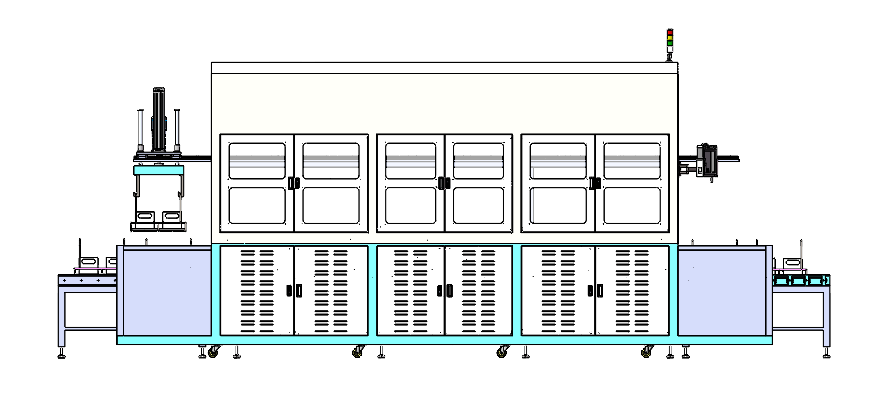
Project Snapshot
- Client Type
- Electronics Manufacturer
- Timeline
- Project dated 2025-07-02
- Deliverables
- Six-station resistor cleaning line layout
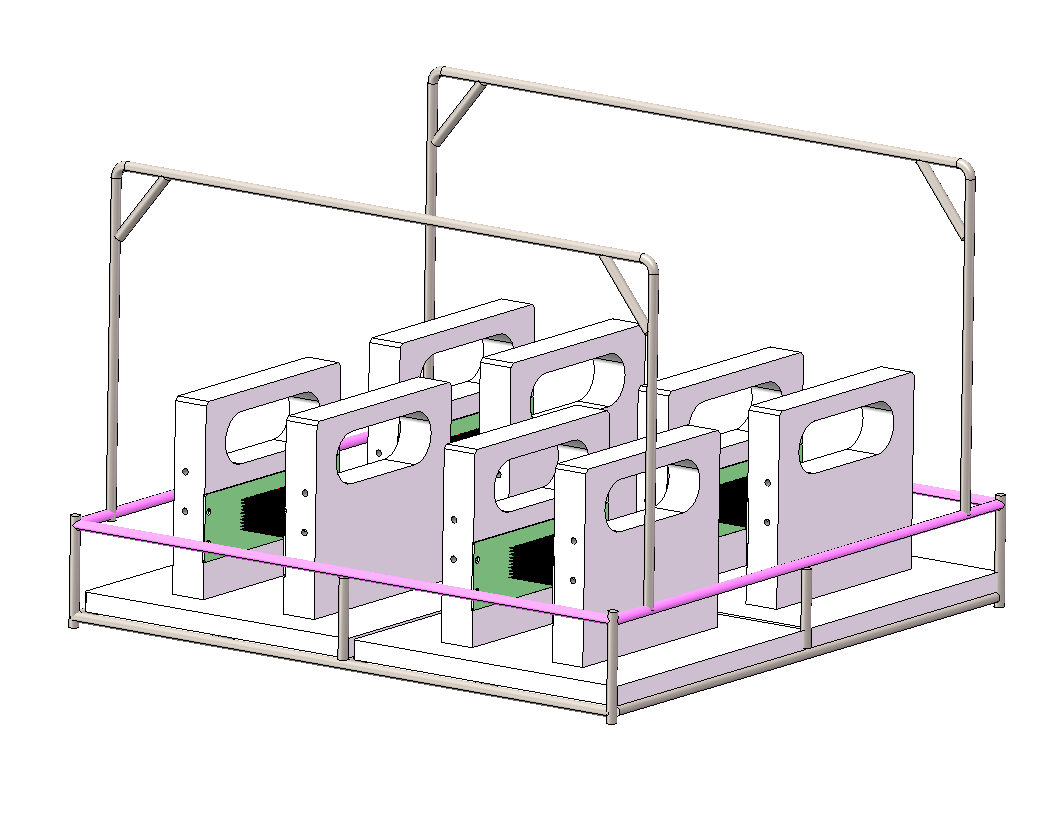
- Magnetic fixture and hanging-basket design
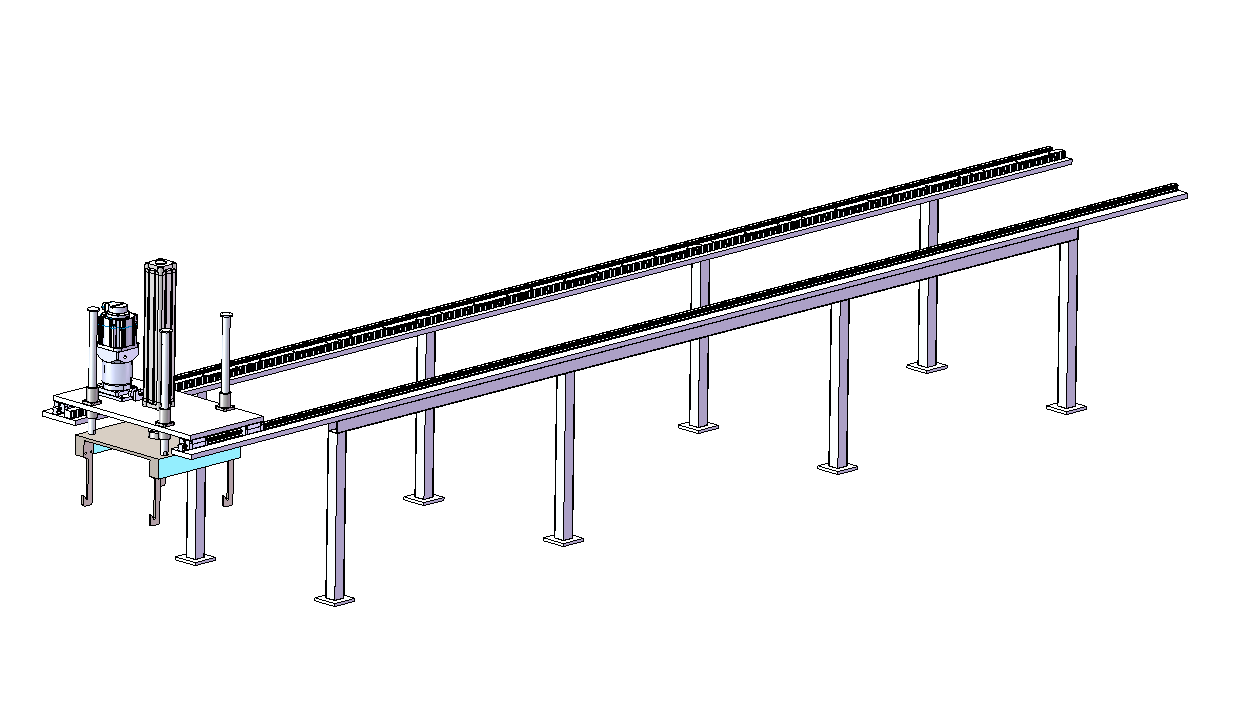
- Transverse pick-and-place transfer module
- Corrosion-resistant liquid tank and replenishment system
Background
Project scope
We designed an electronics resistor cleaning line for welded resistors whose leads can be held by magnetic force. The line uses magnetic separating fixtures so the product can be handled in batches while still keeping the resistor leads controlled through the cleaning sequence. That makes the scope an automated Cleaning Line application for post-welding resistor cleaning.
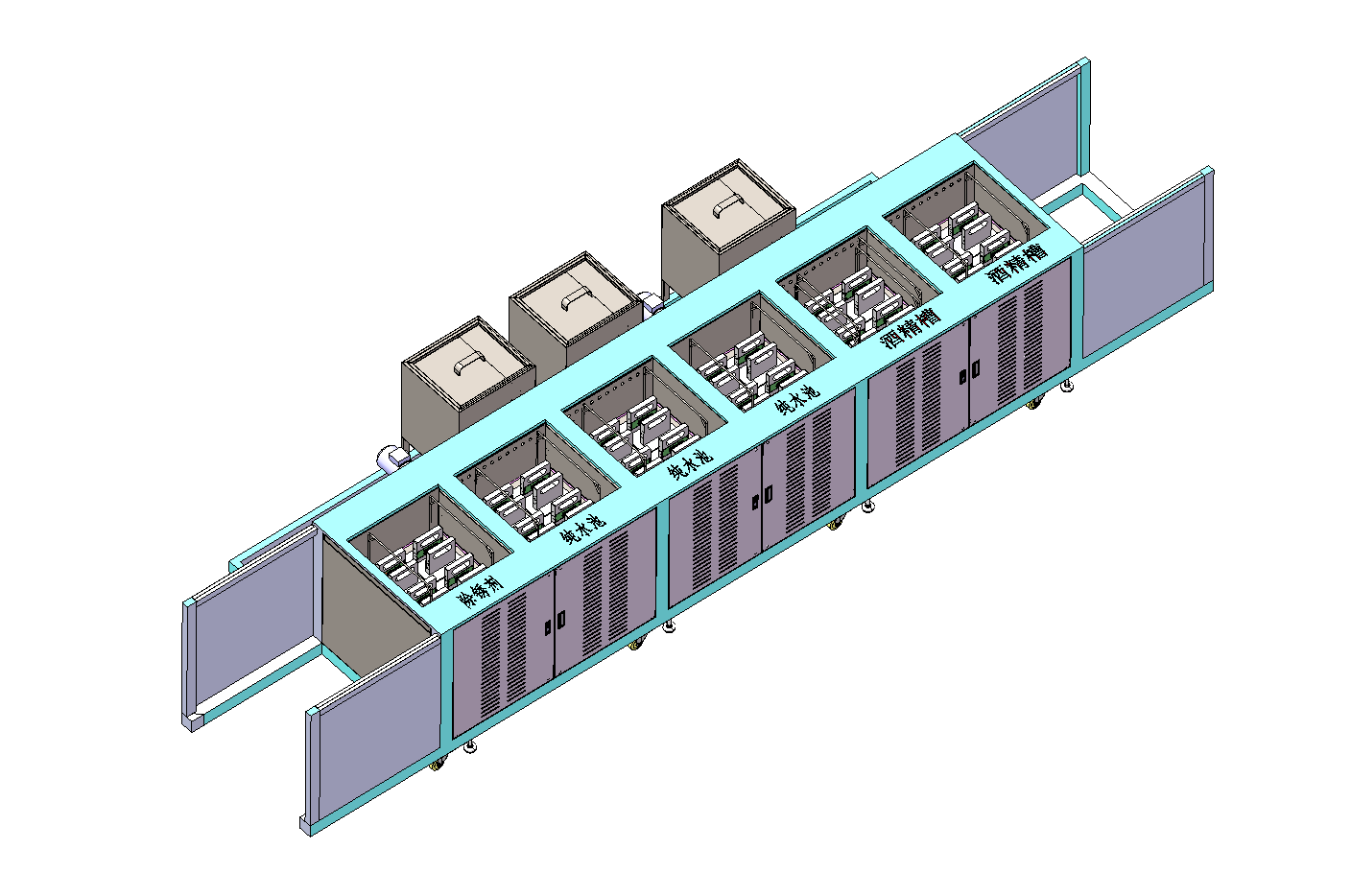
The cleaning route combines rust-remover liquid cleaning with ultrasonic action, three pure-water rinses with automatic water replacement, a first alcohol cleaning bath with ultrasonic action and a second alcohol cleaning bath with ultrasonic action.
Challenge
Batch handling without impact
The process needs stable transfer of magnetic fixtures between liquid stations. The project requirement states that fixture transverse transfer should be stable, without impact or jamming. That matters because the product is handled in fixtures and hanging baskets rather than as loose parts.
Chemical compatibility
The liquid tanks and fixture outer materials need corrosion resistance. The line includes rust-remover liquid, pure-water replenishment and alcohol circulation/filtering tanks, so tank material, replenishment and handling stability are part of the equipment design rather than secondary details.
Approach
Line layout
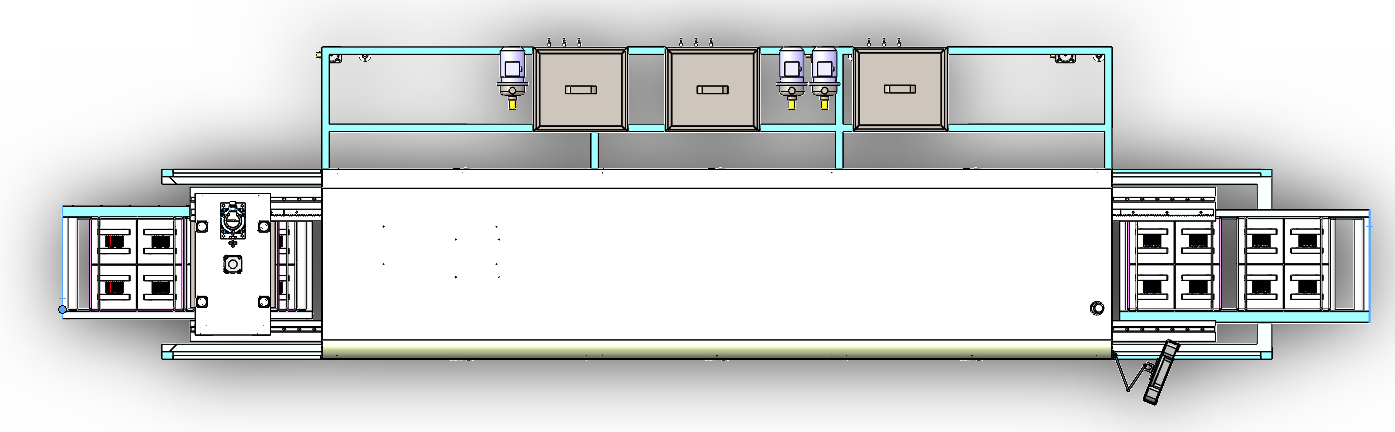
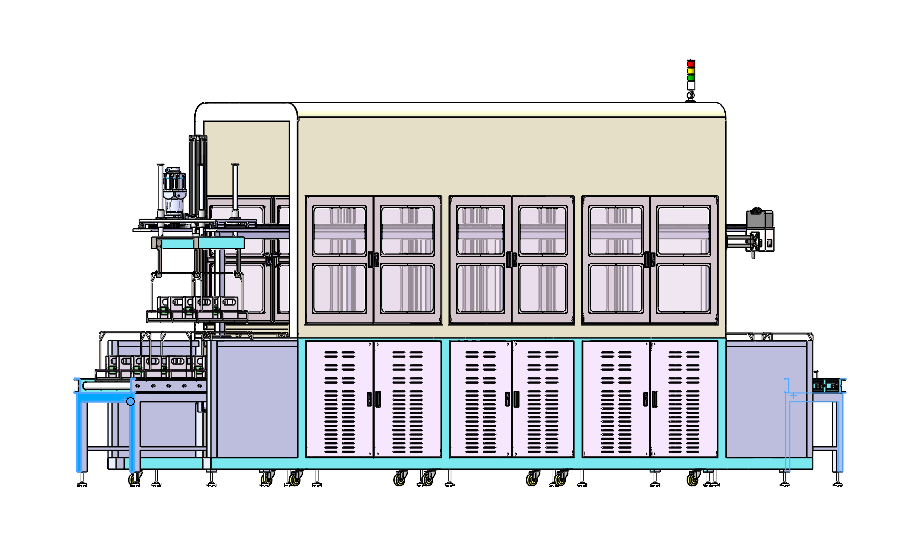
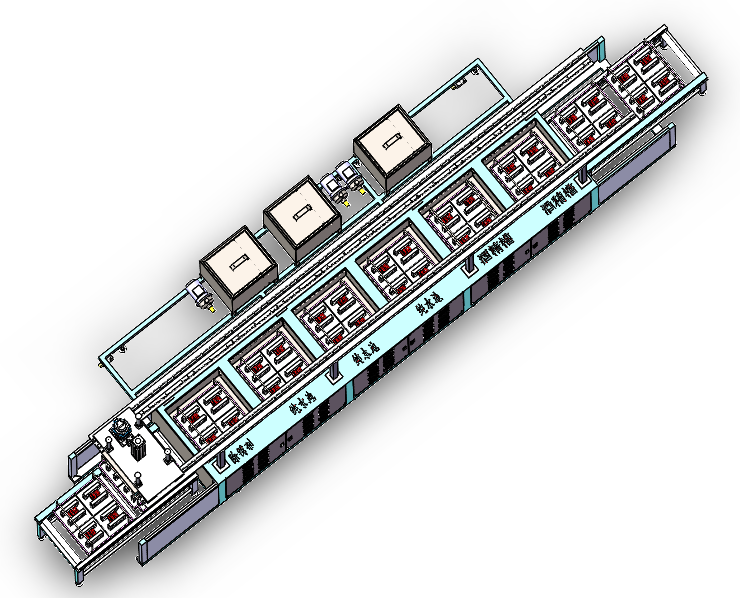
The appearance drawings show a six-station cleaning machine connected with feeding and manual unloading conveyors. The reference dimensions shown in the layout include a full line length of 6,900 mm, a main cleaning-machine section of 4,200 mm, a 1,350 mm width reference and a 1,660 mm side-height reference.
For a related Robotlyne electronics cleaning-line application, see our electronics automated cleaning line case study: https://www.robotlyne.com/electronics-automated-cleaning-line-case-study/
Cleaning and transfer modules
We organized the system around magnetic fixtures, hanging baskets, a transverse pick-and-place module, infeed conveyor, manual unloading conveyor, replenishment tanks, corrosion-resistant liquid tanks and the main machine enclosure.
| Module | Confirmed role |
|---|---|
| Magnetic separating fixture | Holds magnetically retainable resistor leads during cleaning |
| Hanging basket | Carries multiple fixtures for batch transfer |
| Transverse pick-and-place module | Moves baskets between cleaning positions |
| Liquid tanks | Include rust-remover, pure-water and alcohol cleaning positions |
| Replenishment tanks | Support pure-water and alcohol circulation/filtering |
| Conveyors | Support upstream loading and manual downstream removal |
Capacity planning
The fixture plan lists 300 to 500 products per fixture. One hanging basket carries four fixtures, so each basket carries 1,200 to 2,000 products. The stated line efficiency target is 10,200 to 15,000 pieces per hour.
Outcome
Proposed operating result
The resulting cleaning line gives the customer a structured post-welding resistor cleaning process with fixture-based handling, corrosion-resistant tank design and automatic transfer between liquid stations.
Process value
The key value is controlled batch cleaning: magnetic fixtures hold the resistor leads, hanging baskets move product groups through the line, and the transfer system reduces impact while the liquid sequence covers rust-remover cleaning, pure-water rinsing and alcohol cleaning. The available project data does not include investment amount or payback, so we do not assign an ROI figure.
Project Feedback
Share a short review of this case study or tell us what kind of automation project you want to compare it with.
No published reviews yet.