
Riveting equipment for Vision-Guided Riveting Press Cell
Riveting equipment cell with automatic feeding, manual fixture loading, CCD seal-ring inspection, pressing, rotary riveting and discharge at 400 to 600 pcs/hour.
See how we designed this project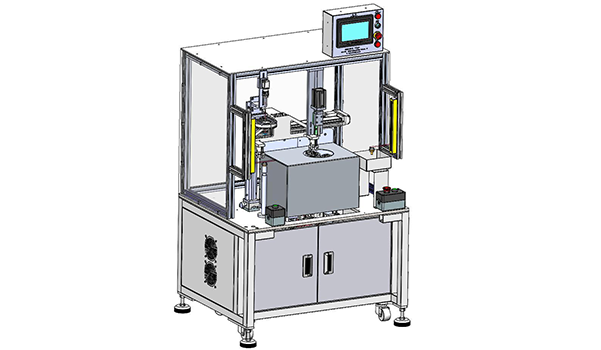
Project Snapshot
- Client Type
- General Manufacturing Site
- Timeline
- Project dated 2026-03-31
- Deliverables
- Vision-guided riveting press concept
- CCD seal-ring inspection station
- Pressing and rotary riveting process layout
- Reference parameter and utility plan
Background
Project scope
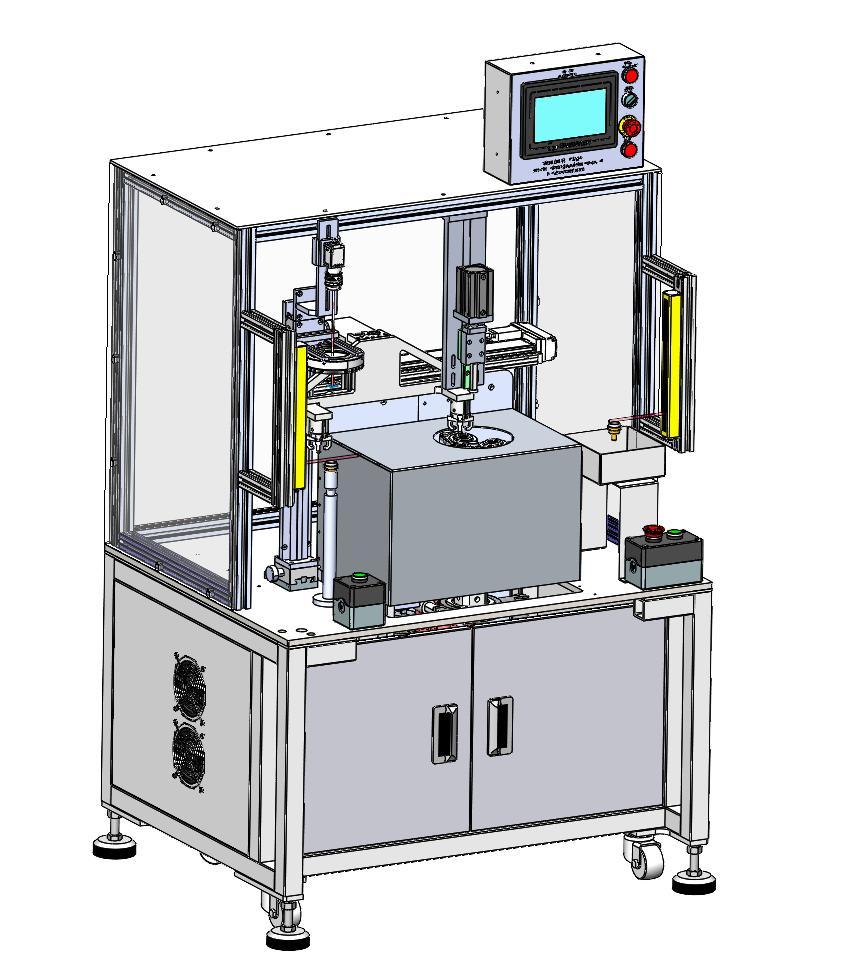
We designed a compact vision-guided riveting press cell for product assembly, seal-ring visual inspection, rotary riveting and automatic discharge. The process keeps manual fixture loading in the loop while automating feeding, inspection, pressing, riveting and discharge around one enclosed workstation. That makes the scope a Riveting equipment application for seal-ring inspection and riveting.
The project material defines this as a one-operator cell controlled by PLC, with pneumatic and electrical utilities specified for site planning.
Challenge
Checking the seal ring before riveting
The riveting operation depends on the seal ring being present and correctly positioned before the part is pressed and riveted. A visual check before pressing reduces the risk of locking an incorrect assembly into a finished part.
Combining manual loading with automatic process steps
The cell must support operator fixture loading while still controlling downstream operations. That makes clear station separation important: the operator loads the fixture, the CCD station checks the seal ring, then the machine handles pressing, rotary riveting and discharge.
Approach
Process route
The confirmed process route is:
- Automatic feeding.
- Manual fixture loading.
- CCD inspection.
- Pressing.
- Rotary riveting.
- Discharge.
The equipment layout also identifies the manual fixture-loading position, CCD seal-ring inspection point, pressing module, receiving/discharge position, safety light curtain and confirmation button.
For readers comparing similar sensor-assembly equipment, we also outline the riveting process considerations in our riveting equipment for sensor assembly article, including how inspection and controlled pressing support a stable assembly sequence.
Reference parameters
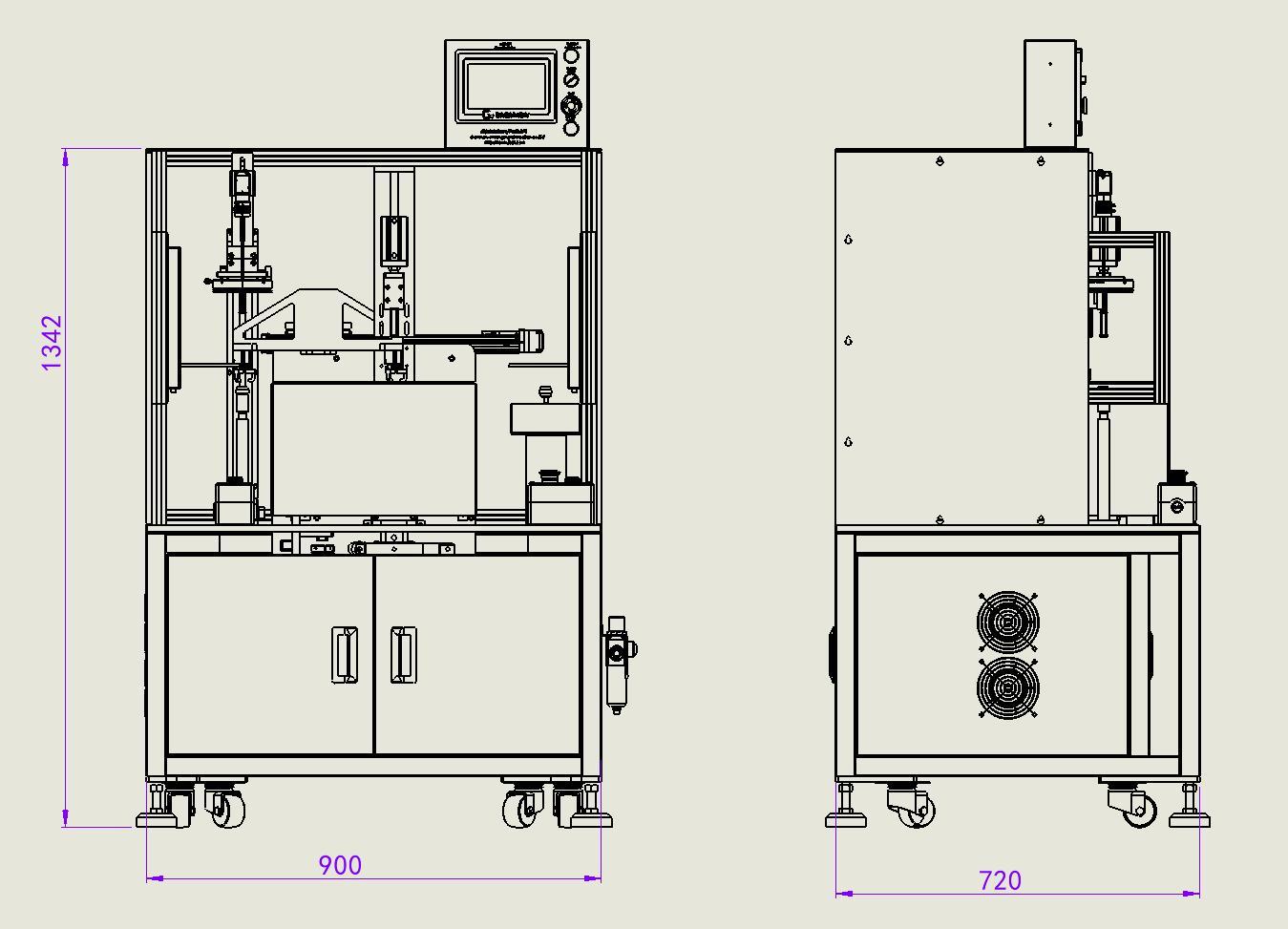
Our project pack contains both a drawing dimension view and a parameter reference table. The drawing view shows 900 mm width, 720 mm depth and 1,342 mm height, while the parameter table lists a reference size of 900 x 750 x 1,400 mm. We keep both values separated because they are presented as two different planning references.
| Item | Confirmed specification |
|---|---|
| Drawing dimension view | 900 x 720 x 1,342 mm |
| Reference size table | 900 x 750 x 1,400 mm, L x W x H |
| Required air supply | 0.4 to 0.6 MPa |
| Required power supply | AC220V |
| Planned capacity | 400 to 600 pcs/hour |
| Control system | PLC |
| Operator requirement | 1 operator |
Safety and operation
The concept includes a safety light curtain and confirmation button near the working area. This supports a semi-automatic operating mode where the operator performs fixture loading and confirmation, while the machine controls the inspection, pressing, riveting and discharge sequence.
Outcome
Proposed operating result
The resulting workstation turns seal-ring inspection and riveting into a defined semi-automatic sequence. It keeps operator loading simple while using CCD verification before the press and riveting steps.
Process value
The key value is process control at a compact workstation scale: one operator, PLC control, specified pneumatic and electrical utilities, CCD inspection before riveting, and a 400 to 600 pcs/hour planning range. The available project material does not include investment amount, labor-comparison data or payback period, so we do not assign unsupported ROI figures.
Project Feedback
Share a short review of this case study or tell us what kind of automation project you want to compare it with.
No published reviews yet.