
Lead Forming systems for Three-Bowl Four-Axis Forming Cell
Lead Forming systems cell for home-appliance components, using three vibratory bowl feeders, three forming stations, a four-axis robot and an enclosed layout.
See how we designed this project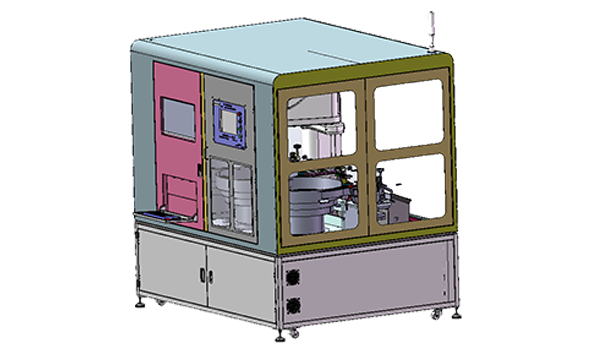
Project Snapshot
- Client Type
- Home Appliance Component Manufacturer
- Timeline
- Project dated 2025-03-03
- Deliverables
- Overall enclosed forming-machine layout
- Three-vibratory-bowl feeding arrangement
- Three forming-station process layout
- Four-axis robot handling concept
Background
Project scope
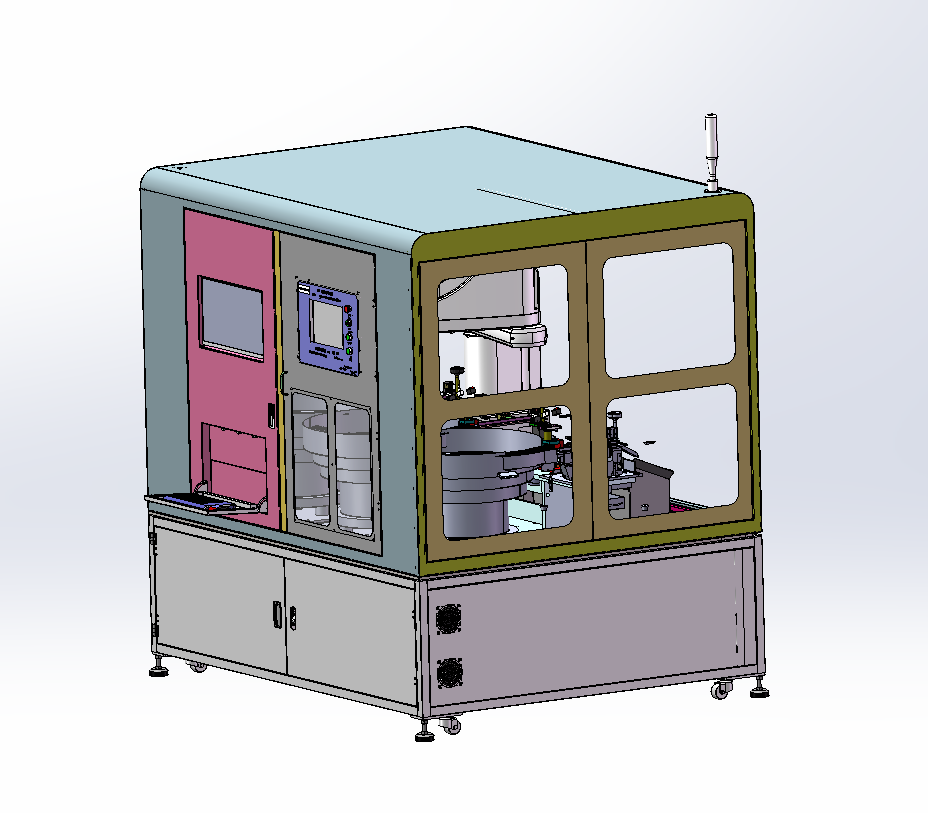
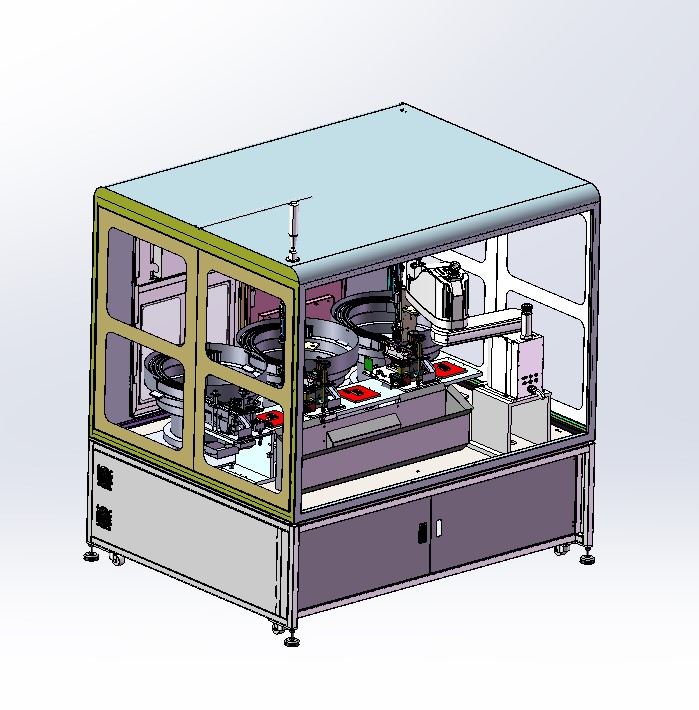
We designed a compact home-appliance component forming cell with three vibratory bowl feeding positions, three forming stations, a four-axis robot and a finished-product area. The concept is built as an enclosed machine, with the feeding and forming hardware located inside a guarded frame. That makes the scope a Lead Forming systems application for multi-feed component forming.
The available project material focuses on the overall layout and process arrangement. It does not include confirmed product dimensions, cycle time, electrical specification, pneumatic requirement, investment amount or ROI, so those values are intentionally not assigned here.
Challenge
Coordinating three feed streams
The forming route depends on three separate vibratory bowl feeding positions. The machine layout therefore needs to keep feeding access, forming stations and robot reach coordinated inside one enclosure.
Keeping the forming route compact
The cell uses three forming stations rather than one general-purpose forming position. That makes station order and robot handoff important, because the four-axis robot has to serve the forming positions and the finished-product area without stretching the machine footprint unnecessarily.
Approach
Process layout
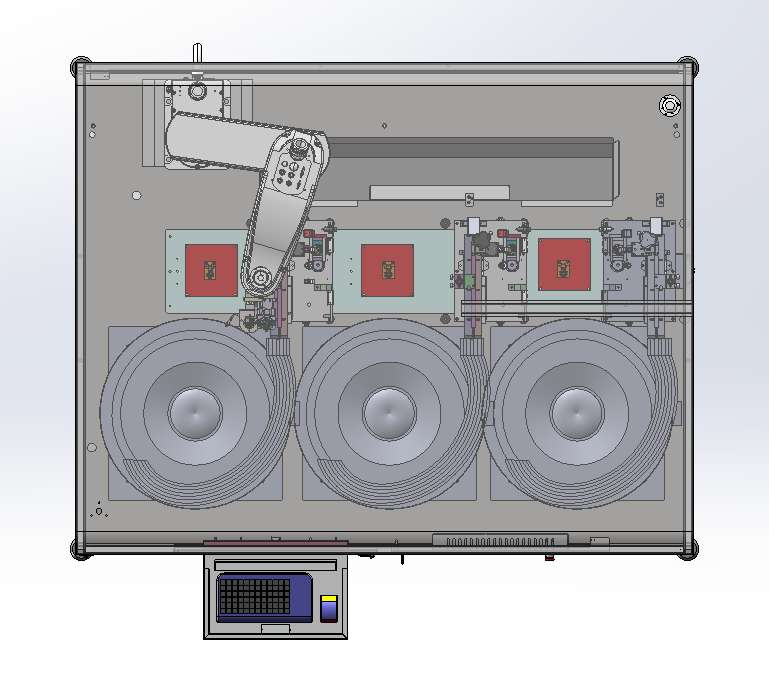
The process route shown in the project material is:
- Vibratory bowl feeding position 1 supplies parts.
- Vibratory bowl feeding position 2 supplies parts.
- Vibratory bowl feeding position 3 supplies parts.
- Parts are handled through forming station 1.
- Parts are handled through forming station 2.
- Parts are handled through forming station 3.
- A four-axis robot coordinates handling between stations.
- Finished parts are placed into the finished-product area.
For a related Robotlyne home-appliance component forming application, see our home appliance component lead forming systems case study: https://www.robotlyne.com/home-appliance-component-lead-forming-systems-case-study/
| Module | Confirmed role |
|---|---|
| Vibratory bowl feeding 1 | Supplies one feed stream into the cell |
| Vibratory bowl feeding 2 | Supplies the second feed stream |
| Vibratory bowl feeding 3 | Supplies the third feed stream |
| Forming station 1 | First forming position |
| Forming station 2 | Second forming position |
| Forming station 3 | Third forming position |
| Four-axis robot | Handles parts between feeding, forming and finished-product positions |
| Finished-product area | Receives completed parts |
Outcome
Proposed operating result
The resulting concept defines a guarded forming machine with three feed streams and three forming positions coordinated by a four-axis robot.
Process value
The value is layout clarity: feeding, forming and finished-product handling are organized inside one enclosed cell. Because confirmed cycle time, equipment pricing and labor-comparison data are not available for this project, we do not claim capacity, savings or payback for this case.
Project Feedback
Share a short review of this case study or tell us what kind of automation project you want to compare it with.
No published reviews yet.
More related case studies will appear here as the library grows.