
Automated Fastening Systems for Six-Axis Robot Screw-Fastening Workstation
Automated fastening systems workstation that converts manual screwdriving to robot fastening with vacuum feeding, two screw types, vision positioning and software.
See how we designed this project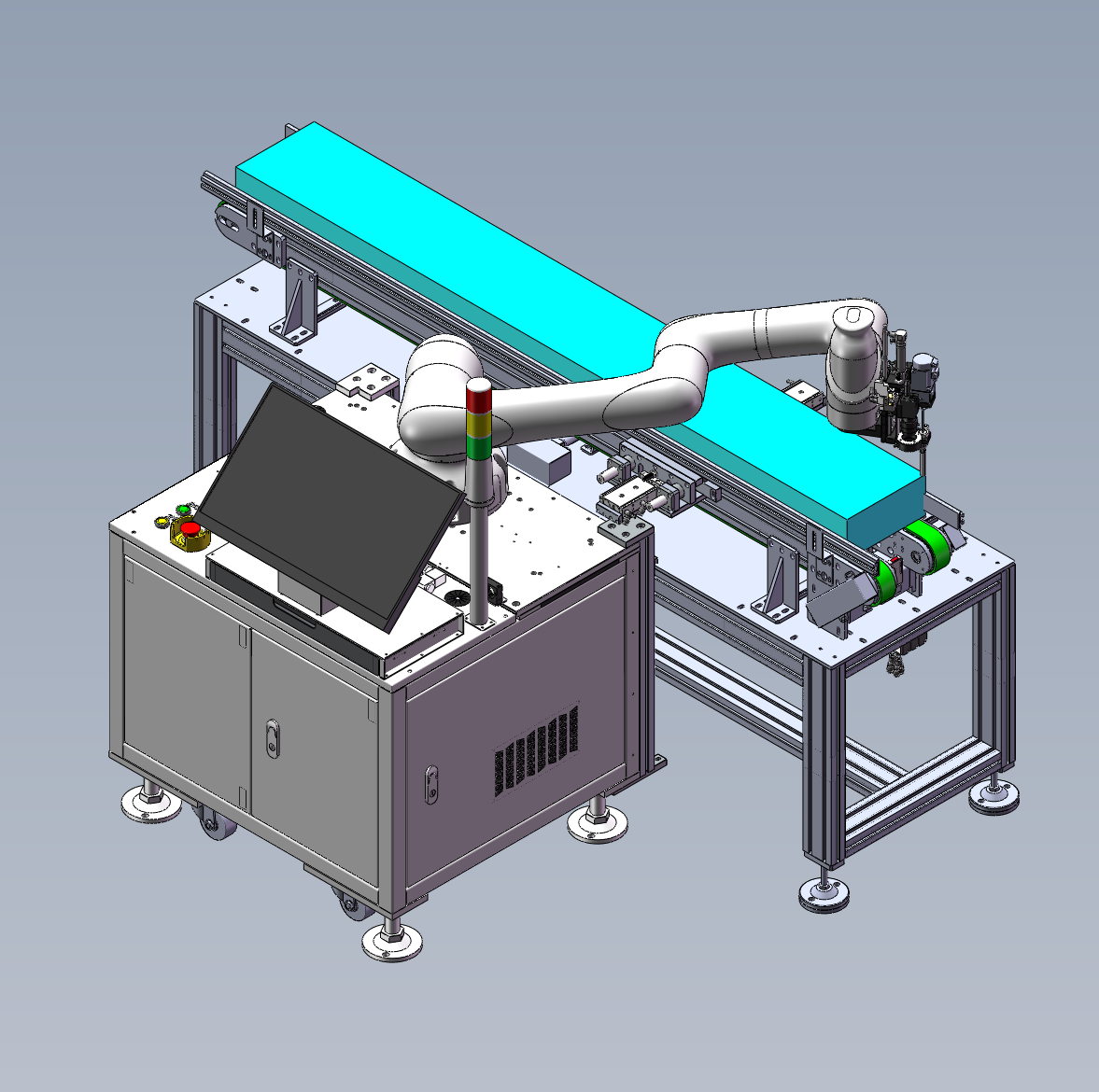
Project Snapshot
- Client Type
- General Manufacturing Site
- Timeline
- Project dated 2025-05-22
- Deliverables
- Six-axis robot screw-fastening process
- Vacuum screw-feeding plan for two screw types
- Vision secondary positioning and fastening fixture concept
- Integrated software and MES-ready data collection
Background
Project scope
We designed a six-axis robot screw-fastening workstation to convert an existing manual screwdriving process into automatic fastening. The site flow remains manually attended: the operator pushes the product to the work position on the double-speed conveyor and starts the equipment manually. That makes the scope an automated fastening systems application for manual conveyor loading with automatic robot screw fastening.
The confirmed product requirement includes compatibility with multiple products up to a maximum size of 1.9 m. The fastening requirement includes two screw types, M4 x 9 and M3 x 8. Product fixtures are supplied separately by the customer side, so the station plan focuses on robot fastening, screw feeding, positioning and software integration around those fixtures.
Challenge
Automating without replacing the whole conveyor
The workstation needs to be built on the existing manual double-speed conveyor rather than replacing the entire material-flow method. That creates a hybrid process: manual product push-in and push-out remain, while screw fastening becomes automatic.
Switching screw types without overstating automation
The screw-feeding method is vacuum pickup. The plan includes two feeders to support two screw types, but changing between screw-fastening requirements still requires manual replacement of the suction nozzle and driver bit. We treat this as a controlled changeover process rather than claiming automatic screw-type changeover.
Approach
Operating sequence
The process sequence is:
- The operator pushes the product into the work position.
- The operator starts the equipment with the start button.
- The six-axis robot carries the screw-fastening attachment to the target position.
- Vision secondary positioning confirms the fastening location.
- The robot completes screw fastening.
- Fastening data is displayed in the upper-computer software interface.
- The operator pushes the finished product out of the station.
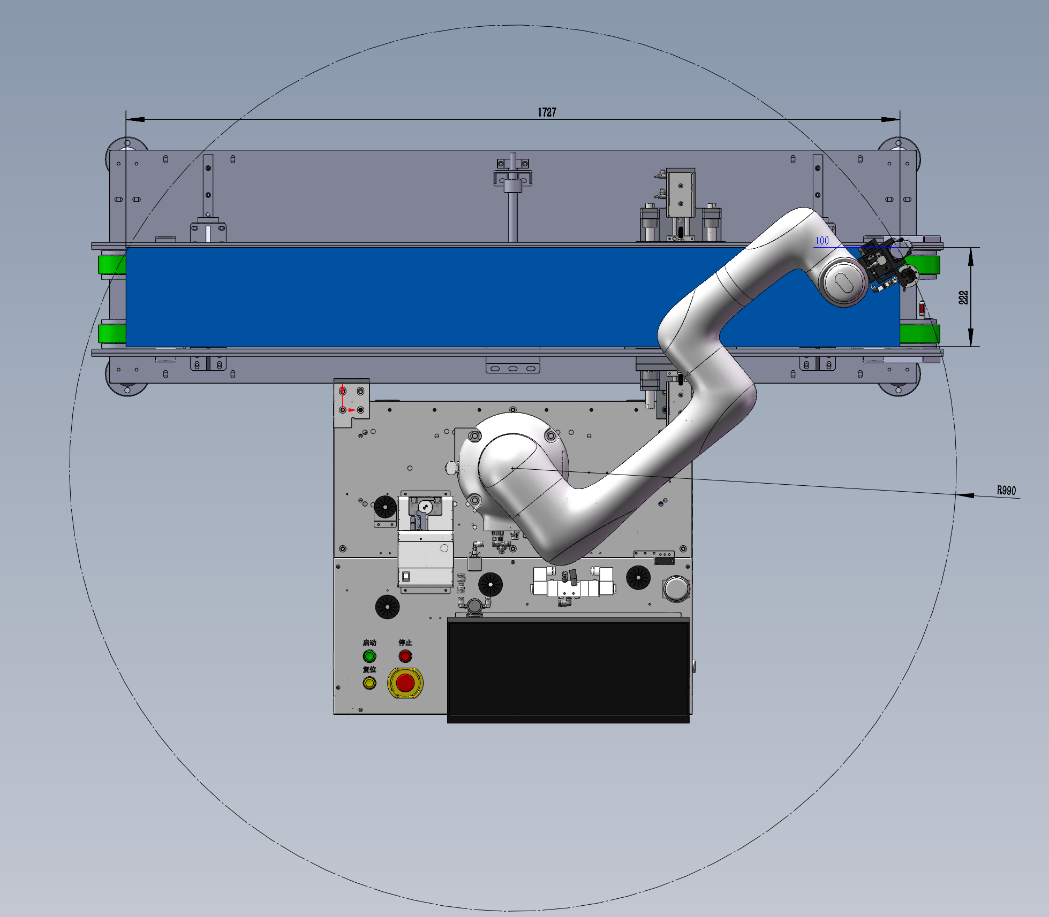
Mechanical and control layout
The workstation uses a six-axis robot with a screw-fastening attachment. The fastening system is built on the double-speed conveyor, with the robot positioned to cover the product area. The plan uses vision secondary positioning to reduce the risk of damaging the product or equipment during fastening.
For a related Robotlyne automated fastening application, see our battery storage automated fastening systems case study: https://www.robotlyne.com/battery-storage-automated-fastening-systems-case-study/
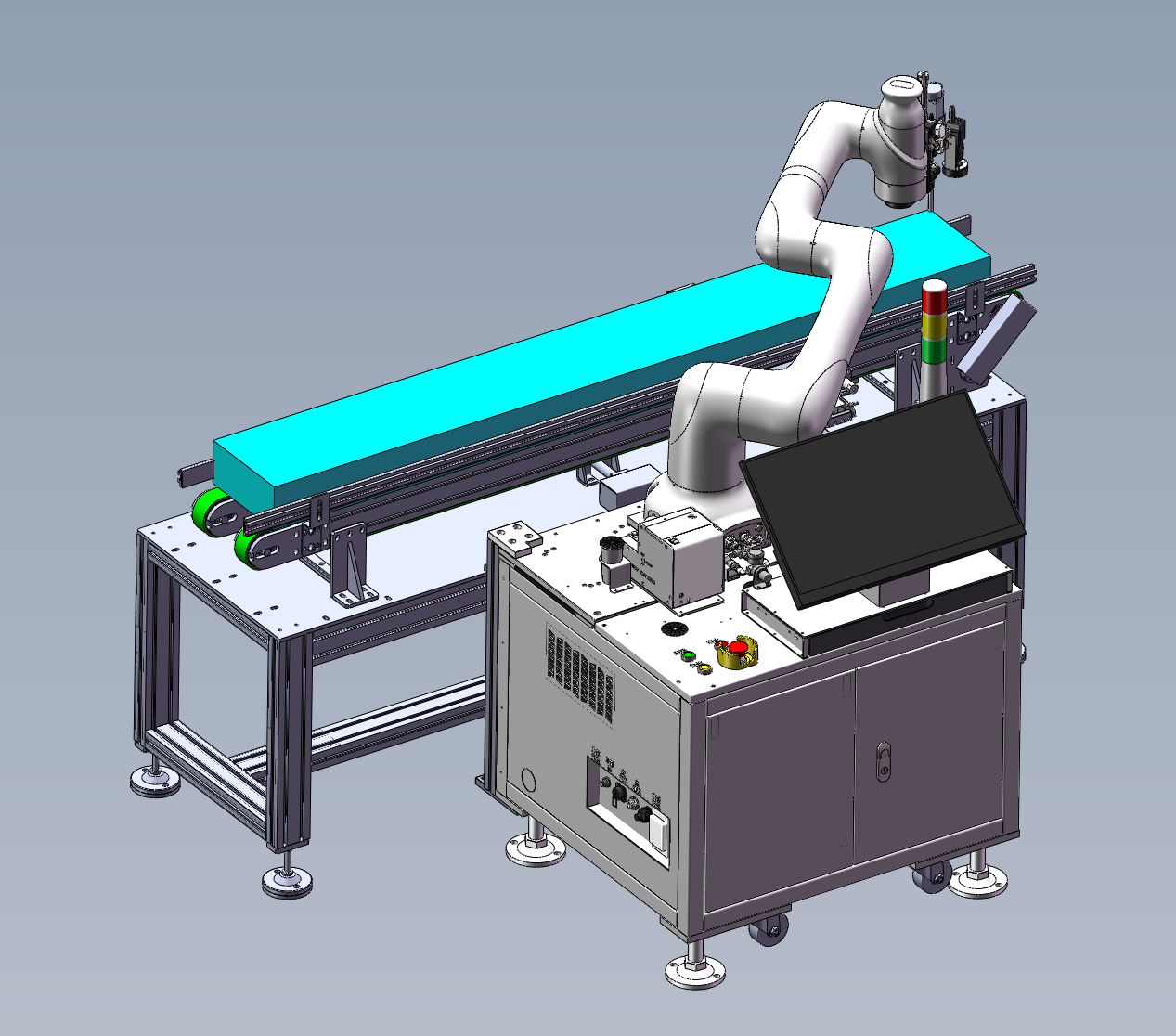
| Item | Confirmed specification |
|---|---|
| Robot type | Six-axis robot |
| Material flow | Manual product push-in and push-out on double-speed conveyor |
| Screw types | M4 x 9 and M3 x 8 |
| Screw feeding | Vacuum pickup with two feeders |
| Positioning | Vision secondary positioning |
| Changeover note | Manual replacement of suction nozzle and driver bit when changing screw requirements |
| Product size | Multiple products, maximum listed size 1.9 m |
Software and data
The software package integrates robot control, motion algorithms and screw-fastening process control into one operating system. The interface is intended to guide operators through use, store production data locally, support data collection through an MES interface and generate production charts for management review.
Outcome
Proposed operating result
The workstation keeps the existing manual conveyor interaction while automating the fastening operation itself. That makes it suitable for a retrofit path where full-line material handling does not need to be replaced before robot fastening is introduced.
Process value
The main value is controlled fastening consistency: robot motion, screw-feeding hardware, vision secondary positioning and fastening data display are combined into one station. The available project data does not include cycle time, equipment investment, labor saving or payback period, so we do not assign unsupported capacity or ROI figures.
Project Feedback
Share a short review of this case study or tell us what kind of automation project you want to compare it with.
No published reviews yet.