
Robot Loading and Unloading Laser Marking Machine for Machine Tending
Machine Tending laser marking machine for tray-based products, using A/B stations, robot pick-and-place, PLC control and 500 to 600 PCS/H capacity.
See how we designed this project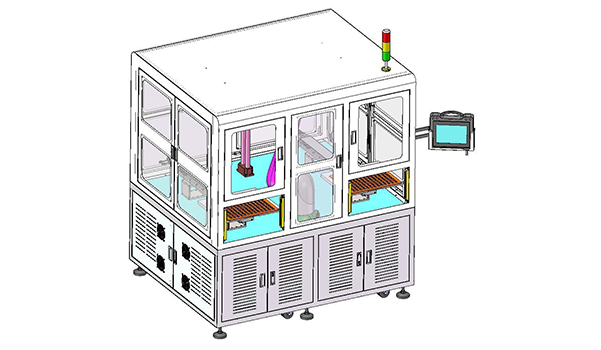
Project Snapshot
- Client Type
- General Manufacturing Site
- Timeline
- Project dated 2026-04-21
- Deliverables
- Enclosed laser marking machine concept
- Dual manual loading and unloading station layout
- Six-axis robot and pneumatic gripper handling module
- Tray-transfer and laser-marking process flow
Background
Project scope
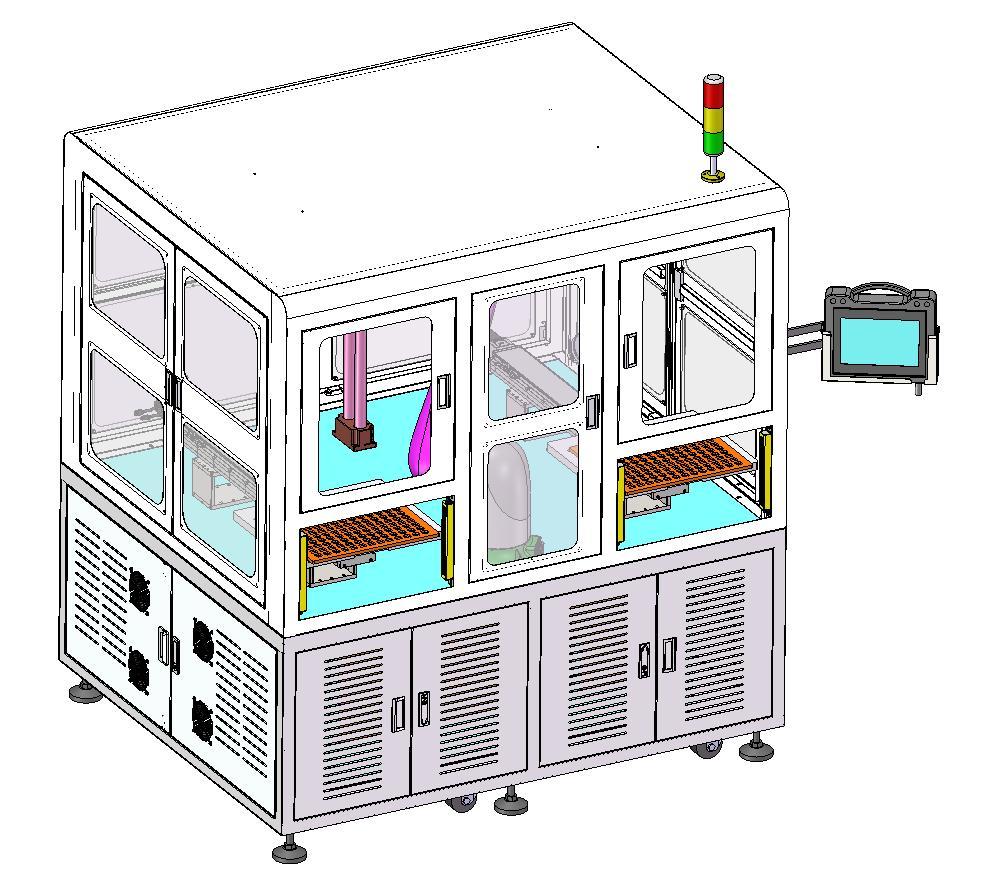
We designed a tray-based loading and unloading laser marking machine for products that require robot handling and repeated marking orientation. The equipment combines manual A/B operation positions, tray transfer, a six-axis robot, pneumatic gripping, a laser marking module and an enclosed machine frame with safety light curtain protection. That makes the scope a Machine Tending application for tray loading, six-axis robot handling and laser marking.
The confirmed single-machine capacity is 500 to 600 PCS/H. The available project data does not include investment amount, labor-comparison data, ROI or payback period, so those figures are not claimed for this case.
Challenge
Marking products from controlled tray positions
The process needs the operator to load and unload trays while the machine controls internal product handling and laser marking. The challenge is to keep the tray position stable enough for robot pickup, marking placement and return-to-tray handling.
Handling multiple marking orientations
The process includes robot flip-marking actions performed 2 to 3 times. That means the machine needs a robot path and gripper concept that can move the product from tray pickup to laser marking, change product orientation, and return the part to the tray without losing placement control.
Approach
Machine layout
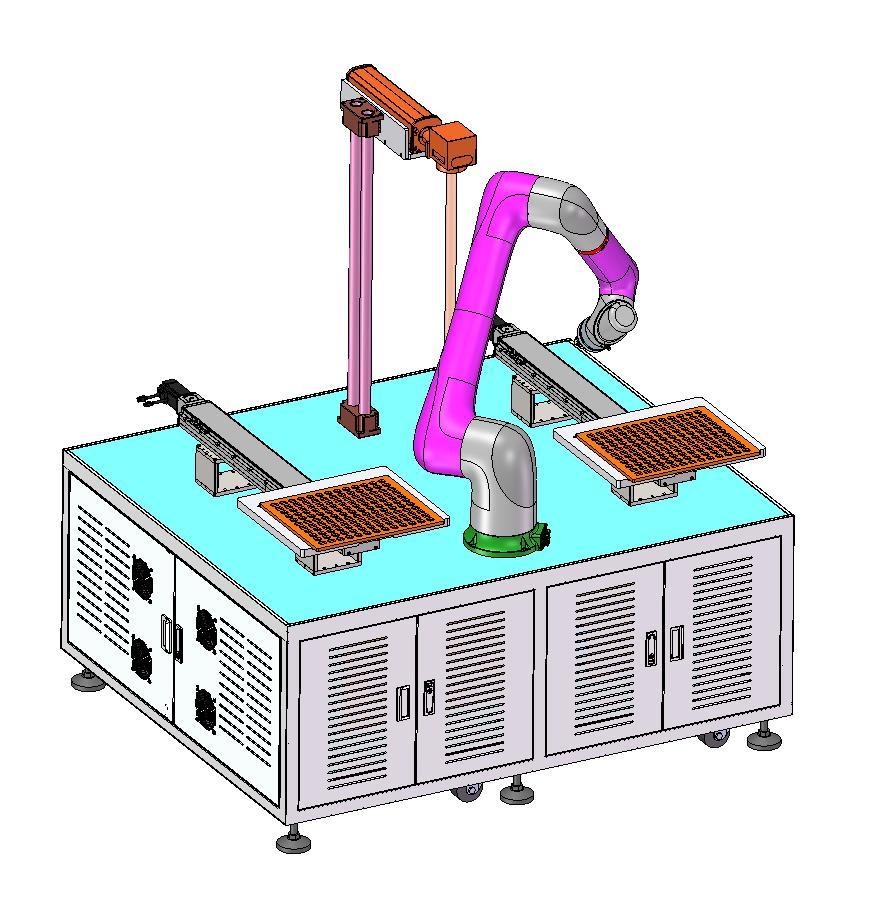
The equipment uses an enclosed frame with an operation interface, manual A and B operating positions and a safety light curtain. Inside the machine, a tray-transfer mechanism feeds the robot pickup position, while the marking module and six-axis robot handle the automated portion of the cycle.
| Module | Confirmed function |
|---|---|
| Manual A/B positions | Operator loading and unloading access |
| Tray transfer | Moves trays to and from the robot pickup and operator positions |
| Six-axis robot | Picks products and moves them to the laser marking position |
| Pneumatic gripper | Product gripping for robot handling |
| Laser marking module | Product marking station |
| Safety light curtain | Operator-area protection |
| Operation interface | Machine operation and status control |
Operating sequence
The confirmed action flow is:
- The operator loads products manually.
- The tray-transfer mechanism moves the tray to the robot pickup position.
- The six-axis robot picks the product.
- The robot moves the product to the laser marking station.
- The robot performs flip-marking actions 2 to 3 times as required by the product.
- The robot returns the product to the tray.
- The tray-transfer mechanism moves the tray back to the manual operation position.
- The operator unloads the tray manually.
We cover the same tray loading, robot handling and laser marking logic in our CNC machine tending case study for laser marking, where the station is planned around operator loading, robot pickup, controlled marking orientation and return-to-tray placement.
Reference parameters
The confirmed reference parameter table defines the machine size, utilities, control platform and labor requirement.
| Item | Confirmed specification |
|---|---|
| Machine size | 1400 x 1800 x 1800 mm, L x W x H |
| Air supply | 0.5 to 0.6 MPa |
| Power supply | AC220V 50Hz |
| Rated capacity | 500 to 600 PCS/H for one machine |
| Control system | PLC |
| Operator requirement | 1 operator |
Outcome
Proposed operating result
The resulting machine keeps the operator at the loading and unloading positions while the enclosed cell controls robot pickup, laser marking, repeated flip orientation and return-to-tray placement.
Process value
The main value is repeatable marking flow in a compact station: one operator, PLC control, defined pneumatic and electrical utilities, tray-based transfer, six-axis robot handling and 500 to 600 PCS/H single-machine capacity. Because commercial terms and payback data are not confirmed in the project pack, this case does not assign unsupported ROI figures.
Project Feedback
Share a short review of this case study or tell us what kind of automation project you want to compare it with.
No published reviews yet.