
Inquiries, partnerships, and case study downloads:sales@robotlyne.com
Manual AGV Belt-Line Layout for Intralogistics AGV Solutions
Intralogistics AGV solutions layout for a manual belt line, organizing programming, testing, DFU, air checks, image review and AGV transfer flow.
Project Snapshot
- Client Type
- General Manufacturing Site
- Timeline
- Project dated 2026-04-10
- Deliverables
- Manual belt-line workstation layout
- AGV transfer process flow
- Reserved three-line expansion layout
- Operator-side component arrangement
Background
Project scope
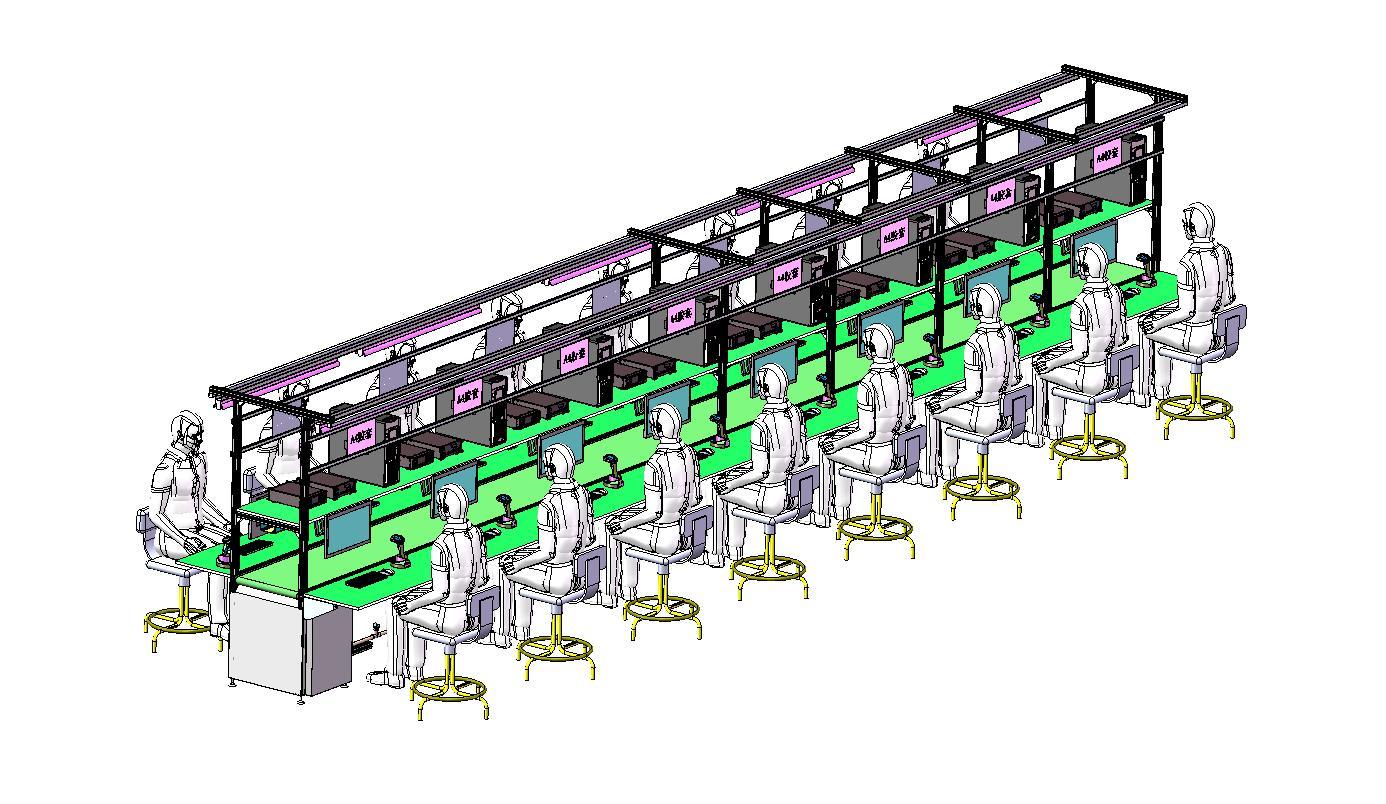
We planned a manual belt-line production layout for assembly and inspection work. The concept uses a long operator-attended line with seated work positions on both sides, a central belt-line structure and workstation modules for programming, testing, DFU checking, air-pressure-meter handling, image review and appearance inspection. That makes the scope a intralogistics agv solutions application for manual belt-line programming, testing and visual inspection.
The available project material focuses on the layout concept, line dimensions and workstation arrangement. It does not include confirmed cycle time, equipment price, labor-reduction target, output calculation or ROI, so those values are not assigned here.
Challenge
Turning a manual route into an organized line
The process is still manually attended, so the value is not full automation for every operation. The design challenge is to organize repeated manual checks into a stable line where material movement, operator access, power, displays, scanning and testing tools all have defined positions.
Reserving future capacity without crowding operators
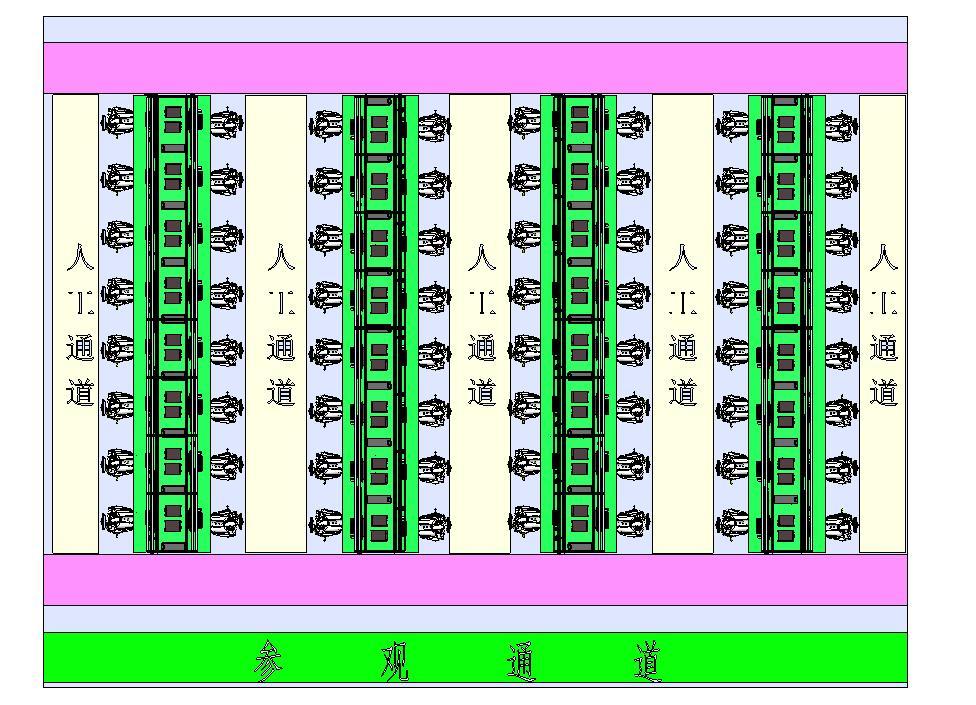
The layout reserves space for three future lines while keeping human passages and an observation passage visible in the plan. That means the immediate line must be compact enough for the current process while leaving a clear expansion path.
Approach
Line footprint and expansion plan
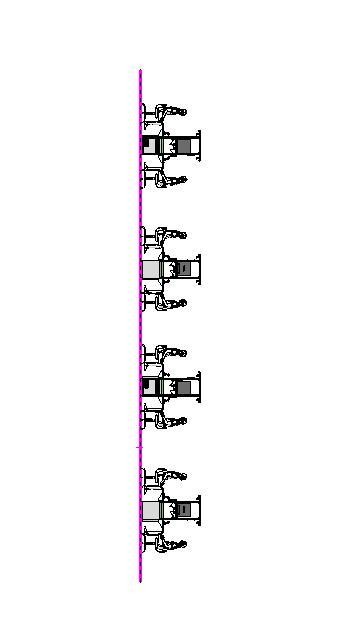
The confirmed layout dimensions show a 17,000 mm line length, 13,200 mm reserved layout depth and 2,000 mm line height in the side view. The plan reserves a future three-line layout and shows human passages between lines plus an observation passage along one side.
| Area | Confirmed planning value |
|---|---|
| Main line length | 17,000 mm |
| Reserved layout depth | 13,200 mm |
| Side-view line height | 2,000 mm |
| Future expansion | Three-line reserved layout |
| Operator access | Human passages between lines and observation passage beside the layout |
| Material transfer concept | AGV transfer route shown from line head to line tail |
Station sequence
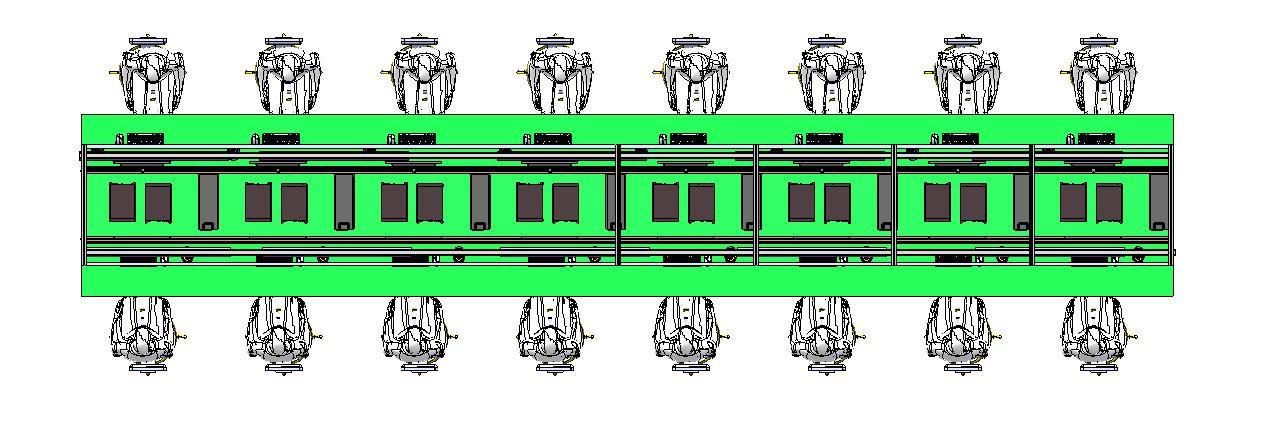
The process-flow page shows the product moving from the line head to the line tail under an AGV transfer concept. The repeated station sequence includes:
- Programming 1.
- Test 1.
- Programming 2.
- DFU test.
- Air-pressure-meter operation.
- Image review 1.
- Image review 2.
- Appearance inspection.
Workstation components
The workstation concept includes operator seats, guide documents, lighting, barcode scanners, test instruments, belt line sections, displays, computer hosts, power cabinets and utility sockets. We treat these as defined line-support modules rather than optional accessories, because each one affects operator ergonomics and repeatability.
| Workstation element | Role in the line |
|---|---|
| Guide documents | Keeps station instructions visible to operators |
| Lighting | Supports inspection and manual handling visibility |
| Barcode scanner | Supports product or process identification at the station |
| Test instrument | Supports station-level electrical or functional checks |
| Display and computer host | Provides operator interface and test/review information |
| Belt line and power cabinet | Carries product flow and supplies line power |
| Operator seating and utility sockets | Defines manual working posture and station service access |
Outcome
Proposed operating result
The resulting concept converts a set of manual programming, testing and inspection steps into a clearer production-line layout. The design defines the line size, operator placement, process sequence, AGV transfer direction and future expansion envelope.
Process value
The main value is layout discipline. Instead of leaving programming, test, image review and appearance inspection as loosely arranged manual work areas, the concept places them along a shared belt-line flow with defined access paths and support components. Because the project material does not provide production rate, staffing comparison, investment amount or payback data, we do not claim unsupported savings or ROI.
Project Feedback
Share a short review of this case study or tell us what kind of automation project you want to compare it with.
No published reviews yet.